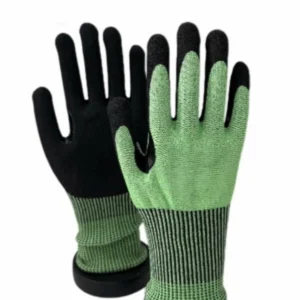
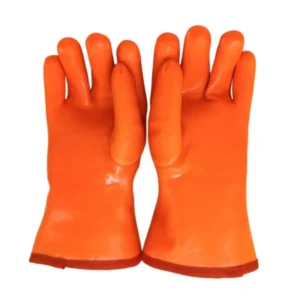
When you handle oily tools, sheet metal, engine parts or drilling equipment, a secure grip affects safety, speed and product control. The right work gloves for oily environments should help you hold contaminated parts while matching the cut, abrasion, impact and liquid exposure in your task.
You cannot choose well from a coating name alone. You need to consider the oil involved, how much reaches the hand, where the glove is coated, what sharp edges are present and how much finger control the operator needs. This guide gives you a practical way to compare options and prepare a meaningful sample trial.
Quick Answer: What Gloves Work Best Around Oil?
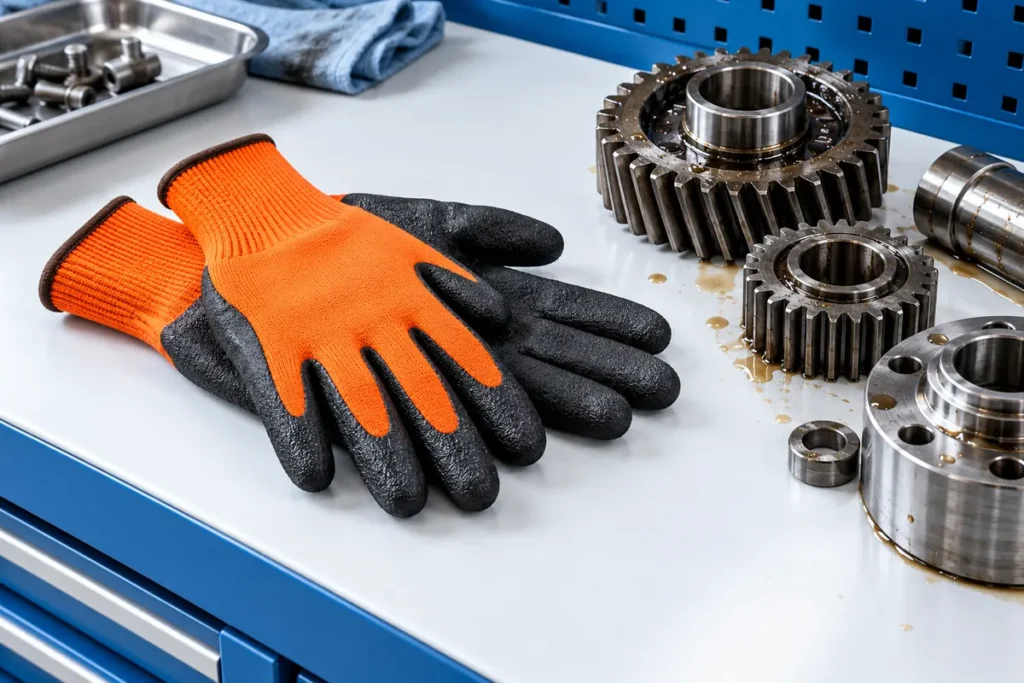
For light to moderate contact with industrial oil, textured nitrile coated gloves are often a practical starting point. Nitrile generally provides useful abrasion resistance, while a sandy or micro foam surface can help manage oil at the contact area. Palm coated constructions favor breathability; three quarter, full and double coatings offer progressively more coverage.
Your final choice must still match the full hazard assessment. If workers handle sharp parts, add an appropriate cut resistant liner. If hands can be struck or pinched, evaluate back of hand impact protection. If the task involves prolonged immersion or hazardous chemicals, select a chemical protective glove using the chemical manufacturer’s safety data and glove permeation information. An ordinary coated work glove should not be treated as a universal chemical barrier.
Start by Separating Three Different Needs
Buyers often use “oil resistant glove” to describe several different jobs. Separating them will make your specification clearer.
1. Grip on oily parts
Your priority is keeping a stable hold on components, tools or containers with a thin oil film. Surface texture, coating formulation and glove fit have a direct effect on handling.
2. Protection from oil reaching the skin
Your priority is coverage. A palm coated glove leaves the back of the hand open for airflow, while a full or double coated glove creates a more extensive physical layer. Seams, cuff design and exposure time also matter.
3. Protection from a hazardous chemical
Your priority is verified chemical compatibility. You must identify the substance and concentration, then check permeation, degradation and breakthrough data for the exact glove. A glove that grips an oily component well may still be unsuitable for chemical immersion.
This distinction helps you avoid buying a highly breathable glove for a splash heavy task or an unnecessarily heavy glove for precise assembly.
Assess the Actual Work Before Comparing Gloves
The U.S. Occupational Safety and Health Administration advises employers to select hand protection according to the task, working conditions, duration of use and hazards present. Build your requirements around the real job instead of a broad industry label.
Record the following information:
- Type of oil, coolant, grease or chemical present
- Light film, intermittent splash, frequent splash or immersion
- Contact time during one work cycle
- Sharp edges, burrs, swarf and puncture points
- Abrasive surfaces and expected glove life
- Crush, pinch and impact exposure
- Required fingertip control and tool use
- Heat, cold and workplace temperature
- Cleaning method and replacement schedule
A maintenance technician changing filters may need a different glove from an operator feeding oily sheet metal into a press, even though both jobs occur in the same plant.
Why Nitrile Coatings Are Common in Oily Work
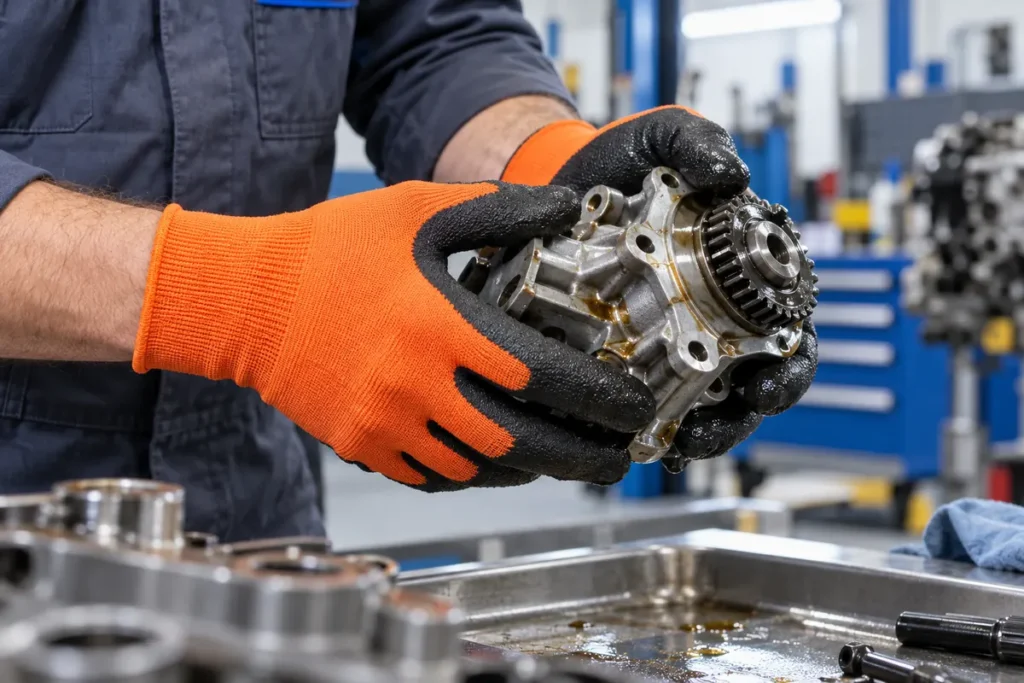
Nitrile coated gloves are widely used for automotive work, machinery maintenance, metal handling and general industrial tasks. The coating can resist abrasion and offers a durable contact surface. Its performance, however, changes with texture, thickness, coverage and the liner beneath it.
Sandy nitrile
A sandy nitrile surface has a visibly textured finish. Its rough contact area can help you maintain control of oily parts and tools. It is a useful option when grip is a main purchasing criterion and the work includes heavier components.
Foam or micro foam nitrile
Foam nitrile is often chosen for flexibility, touch and general handling. Some designs are engineered to channel light amounts of liquid away from the surface. Performance varies by formulation, so compare samples under your own oil conditions rather than assuming every foam coating behaves the same way.
Smooth nitrile
Smooth nitrile provides an even coating surface and can be easy to wipe. It may suit general handling and situations where liquid coverage matters more than an aggressive grip texture. For oily handling, verify its grip during a trial.
You can review additional constructions in the Everpro nitrile coated gloves category.
Choose the Right Coating Coverage
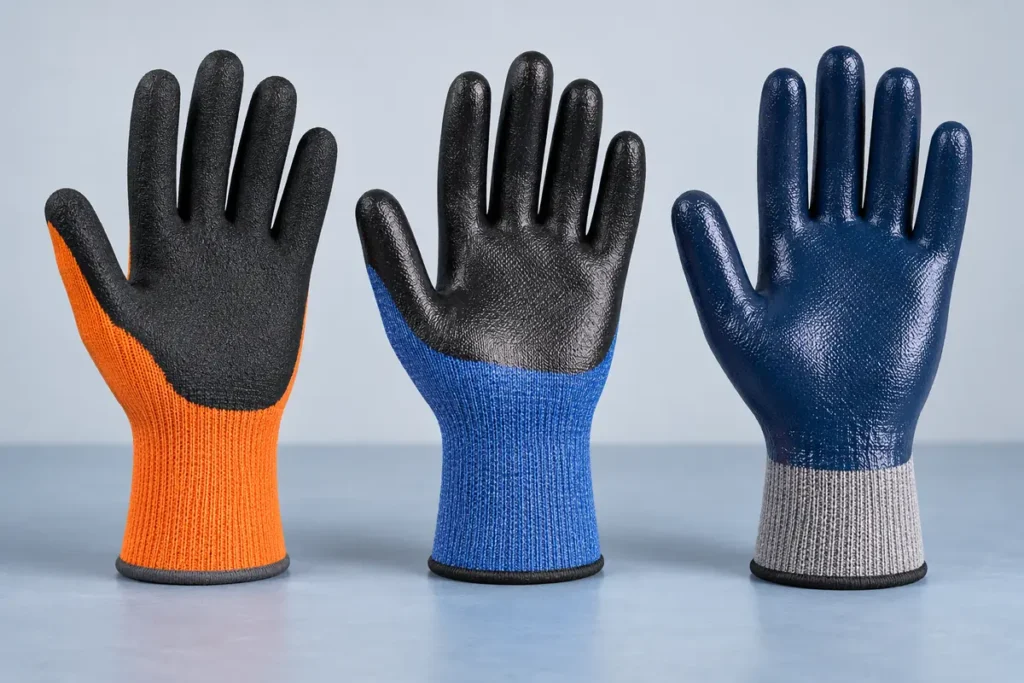
Coating coverage affects breathability, liquid contact and glove flexibility.
| Coating style | Main advantage | Suitable starting point |
|---|---|---|
| Palm coated | Airflow and dexterity | Light oil film, assembly and parts handling |
| Three quarter coated | More side and knuckle coverage | Maintenance and intermittent splash |
| Fully coated | Broader liquid and dirt coverage | Frequent contact around the whole hand |
| Double coated | More substantial barrier and durability | Heavier oil exposure and demanding handling |
Coverage alone does not prove chemical resistance. A fully coated general work glove can reduce contact with oily dirt while still lacking the tested permeation performance required for a hazardous chemical.
Match the Liner to Cut and Comfort Requirements
The coating controls much of the surface interaction, while the liner contributes fit, comfort and mechanical protection.
For general oily assembly without sharp edges, a nylon or polyester liner may provide the flexibility you need. For handling sheet metal, machined edges or broken components, consider a cut resistant liner made with HPPE or other engineered fibers.
Use the reported ANSI/ISEA or EN ISO cut rating as one part of your decision. Higher cut protection can add material and may change dexterity, so select the level supported by the task assessment. If a specification calls for ANSI A4, for example, confirm that the exact glove model has the claimed test result. Do not transfer a rating from a similar looking product.
For a higher cut resistance option with an oily grip surface, see these A6 nitrile coated cut resistant gloves.
Add Impact Protection When the Back of the Hand Is Exposed
Oilfield maintenance, pipe handling and heavy equipment service can combine slippery surfaces with impact and pinch hazards. In these conditions, consider thermoplastic rubber protection across the knuckles and fingers. The impact elements should flex with the hand and stay aligned when the worker grips a tool.
Review the nitrile coated TPR impact gloves as one example of a combined grip and back of hand protection design.
Impact padding does not replace task controls or proper tool use. It is one part of a complete hand protection assessment.
Check Fit, Dexterity and Cuff Design
A glove can have the right materials and still perform poorly if it does not fit. A loose glove can bunch at the palm and reduce control. A tight glove can limit movement and cause early fatigue.
Ask operators to check:
- Fingertips reach the ends without excess fabric
- The palm stays flat when gripping a tool
- The cuff remains secure during repeated movement
- Small fasteners can be picked up and positioned
- The glove can be put on and removed consistently
- Sizes cover the actual workforce
A knit wrist works well for many workshop tasks because it helps keep debris out and holds the glove in place. Longer cuffs may be needed when the wrist or forearm is exposed.
Test Grip Under Real Oily Conditions
A supplier sample becomes much more useful when you test it with a repeatable method. Select two or three candidate gloves and use the same part, oil, task and time period for each.
A simple workplace trial
- Confirm that every candidate meets your minimum cut, impact and coverage requirements.
- Apply a controlled amount of the actual process oil to a standard part.
- Ask trained operators to complete the same lift, turn, tool and placement actions.
- Record grip security, finger control, fatigue, heat and glove movement.
- Inspect coating wear, swelling, cracking and delamination after the trial.
- Repeat with several workers and relevant glove sizes.
- Compare usable service life and replacement frequency, not only unit price.
Do not deliberately create unsafe conditions to test a glove. Keep the trial within established work procedures and stop if the glove shows loss of integrity.
Compare Total Use Cost, Not Just Purchase Price
A low price per pair does not always produce the lowest cost per shift. Poor grip may slow handling, while rapid coating wear can increase replacement and inventory use. An overly heavy glove can also reduce acceptance among workers.
When you compare quotations, request consistent data:
- Model and construction
- Liner material and gauge
- Coating material, texture and coverage
- Available sizes and color options
- Verified performance ratings
- Package quantity and minimum order quantity
- Logo and label methods
- Sample and production lead time
- Recommended storage and shelf conditions
Everpro supports bulk sourcing and customization through its work gloves wholesale service. Provide the task details above when requesting samples so the proposed glove is tied to your application.
Inspect, Clean and Replace Gloves Correctly
Inspect gloves before each use. Replace them if the coating is torn, cracked, swollen or separating from the liner, or if the grip surface has worn smooth. Also replace gloves that are heavily contaminated inside or cannot be cleaned according to the manufacturer’s instructions.
Never assume washing restores protection. Cleaning agents, heat and repeated flexing can change coating performance. Follow the care guidance for the exact glove and keep heavily contaminated gloves away from clean storage areas.
Purchasing Checklist for Oily Work Gloves
Before approving an order, confirm that you can answer these questions:
- What liquid contacts the glove?
- Is the exposure a film, splash or immersion?
- Which surfaces of the hand need coverage?
- What grip texture works with the actual component?
- Are cut, puncture, abrasion or impact ratings required?
- How much dexterity does the task demand?
- Which sizes are needed?
- Has the exact model been tested and documented?
- Has the glove passed a controlled workplace trial?
- When must workers replace it?
If you send these details through the Everpro contact page, the product discussion can begin with your working conditions instead of a generic glove description.
Frequently Asked Questions
Are nitrile coated gloves oilproof?
Do not treat every nitrile coated work glove as oilproof. A coating can improve grip and reduce contact with oily dirt, but protection depends on coating coverage, construction, exposure time and the specific liquid. For immersion or chemical hazards, verify test data for the exact glove.
Which surface is better for oily grip: sandy or smooth nitrile?
Sandy nitrile is commonly selected when an aggressive textured grip is needed. Smooth nitrile may suit tasks that prioritize an even coated surface. Test both with your actual oil and parts because formulation and working conditions affect performance.
Should you choose palm coated or fully coated gloves?
Choose palm coating when breathability and dexterity are priorities and contact is mainly at the palm. Choose more extensive coating when oil frequently reaches the sides or back of the hand. Full coating still does not automatically qualify the glove for chemical immersion.
Do oil resistant gloves also provide cut protection?
Only when the exact glove includes a cut resistant liner and has a documented cut rating. Coating material and cut resistance are separate parts of the specification.
What gloves suit oily sheet metal handling?
Start with a textured nitrile coated glove combined with a cut resistant liner at the level required by your risk assessment. Check that the glove also provides adequate puncture resistance, fit and dexterity for the metal edges and handling method.
How often should oily work gloves be replaced?
Replace them when damage, swelling, cracking, delamination, contamination or loss of grip affects safe use. The interval depends on the task and exposure, so base it on inspections and documented trials rather than a universal number of days.
Can one glove cover automotive, construction and oilfield work?
One model may suit several tasks, but industry labels are too broad for final selection. Compare the oil exposure, sharp edges, impact risk, required coverage and dexterity of each task before standardizing a glove.
Choose from the Task Outward
The best work gloves for oily environments begin with a clear description of the job. Identify the liquid and exposure, select the necessary coating coverage, add verified protection for sharp or impact hazards, and test the glove with real parts and operators. This process gives you a specification you can defend and helps your supplier recommend a more suitable product.