When your team handles sheet metal, glass, sharp components, or rough construction materials, you need more than a general-purpose work glove. ANSI A4 cut-resistant gloves give you a practical middle level of cut protection for many industrial jobs while still allowing the dexterity needed to grip tools, sort parts, and complete assembly work.
An A4 rating alone does not tell you whether a glove is right for your application. You should also evaluate the liner, coating, grip, fit, abrasion resistance, puncture resistance, and working conditions. This guide shows you what the A4 rating means and how you can compare gloves before requesting samples or placing a bulk order.
Quick Answer: What Does ANSI Cut Level A4 Mean?
ANSI Cut Level A4 indicates that the tested area of a glove resisted **1,500 to 2,199 grams of cutting load** under the applicable test method. It sits above A3 and below A5 on the A1–A9 scale.
This rating makes A4 gloves a common option when you face moderate cut hazards during metal component assembly, construction, maintenance, appliance manufacturing, and similar material-handling tasks. However, the result describes laboratory cut resistance. It does not mean the glove is cut-proof, and it does not automatically confirm protection against needles, chemicals, heat, or rotating equipment.
The current ANSI/ISEA 105 hand protection standard classifies cut performance separately from abrasion and puncture performance. You should therefore compare each relevant rating rather than treating A4 as a complete safety specification.
Is ANSI A4 the Right Cut Level for Your Job?
You can consider A4 protection when workers regularly touch sharp edges but do not perform the highest-risk blade or heavy stamping tasks. Typical applications include:
– Handling unfinished metal parts and sheet-metal components
– Installing ductwork and HVAC components
– Moving glass panels with controlled edges
– Automotive and appliance assembly
– Construction and industrial maintenance
– Handling sharp plastic parts or packaging materials
– Sorting components with burrs or rough edges
Before choosing a glove, review the actual task rather than relying only on an industry label. A maintenance worker handling a deburred panel may need different protection from a worker handling thin, freshly cut steel. The frequency of contact, edge sharpness, force, hand movement, and consequences of a slip all affect your selection.
In the United States, [OSHA 29 CFR 1910.138](https://www.osha.gov/laws-regs/regulations/standardnumber/1910/1910.138) requires employers to base hand-protection selection on the glove’s performance relative to the task, conditions, duration and identified hazards. That makes your workplace hazard assessment the starting point.
ANSI A3 vs A4 vs A5: What Changes?
The difference between adjacent ANSI levels is the amount of cutting load measured during testing.
| ANSI cut level | Cutting load range | General selection context |
| A3 | 1,000–1,499 g | Light-to-moderate cut exposure and controlled parts handling |
| A4 | 1,500–2,199g | Moderate cut exposure in construction, assembly and metal handling |
| A5 | 2,200–2,999 g | Higher cut exposure involving sharper or heavier materials |
You should not automatically select the highest available number. A heavier protective construction can reduce tactile sensitivity, flexibility or comfort if the glove is poorly engineered. Your goal is to match protection to the risk while maintaining enough control for the task.
If your assessment places the task between two levels, test both options in the real work process. Ask workers to evaluate grip, hand fatigue, precision, and how often they remove the gloves. A glove only protects the user when it is appropriate for the task and consistently worn.
Which Materials Are Used in A4 Cut-Resistant Gloves?
Many modern A4 gloves use a composite knitted liner rather than one fiber alone. The construction may combine HPPE, nylon, polyester, glass fiber, steel fiber or other reinforcement yarns. The exact formula affects cut resistance, flexibility, weight and feel.
HPPE liner
High-performance polyethylene, usually shortened to **HPPE**, offers a strong strength-to-weight ratio. When you choose HPPE work gloves, you often gain a lighter and more flexible liner than traditional bulky constructions. Manufacturers can combine HPPE with reinforcing fibers to achieve the required cut performance.
Nylon or polyester
Nylon and polyester can support fit, elasticity and durability. They are normally part of the composite yarn rather than the main source of cut resistance.
Glass or steel reinforcement
Reinforcing fibers can increase cut performance, but the finished yarn and knitting method determine how the glove feels. You should request a sample if comfort, skin sensitivity, or prolonged wear is important. Do not assume that every glove with the same fiber list will perform in the same way.
Gauge and dexterity
Gauge describes knitting density. A higher-gauge liner is generally finer, while a lower-gauge liner is generally thicker. Gauge does not equal cut level. You can find different gauge constructions that reach A4 by using different yarn technologies. Compare the complete tested glove, not just the gauge number.
Why Choose a Sandy Nitrile Palm Coating?

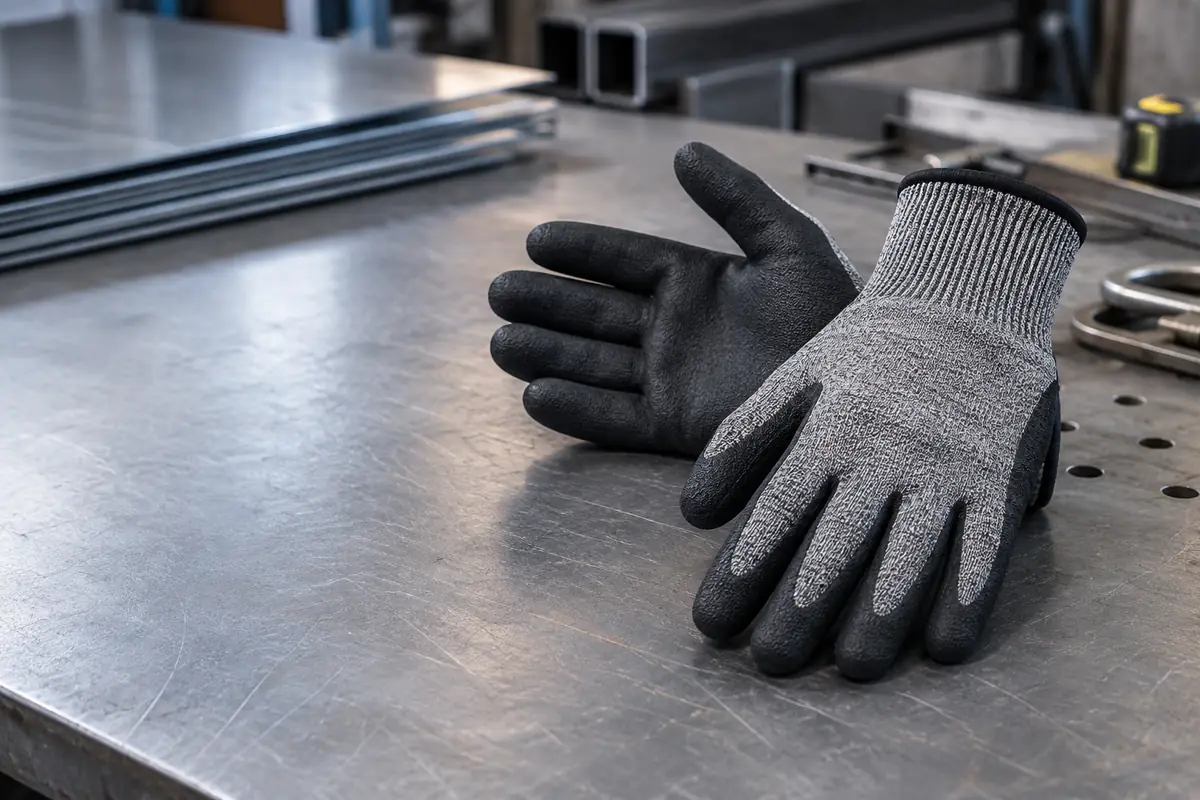
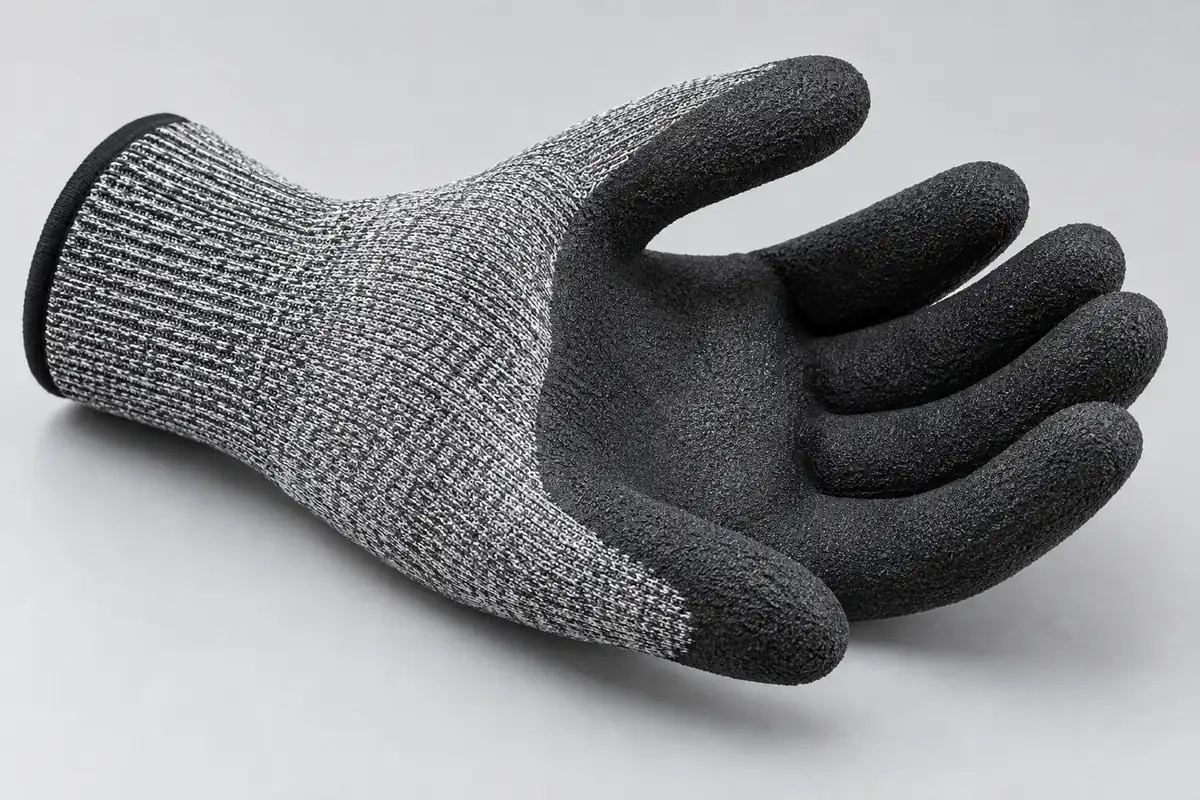
A sandy nitrile coating has a textured surface designed to support grip on tools and components, particularly in dry and lightly oily working conditions. The coating also creates a wear layer over the palm, while the uncoated or partially coated back can allow more ventilation.
When you compare sandy nitrile gloves, check these details:
1. Coating coverage: A palm coating favors breathability. A three-quarter or full coating gives more surface coverage but can retain more heat.
2. Oil conditions: Some coatings handle light oil contact better than others. Ask for task-specific sample testing instead of assuming that a nitrile coating makes the glove oil-proof.
3. Texture: The texture should help you maintain control without making delicate parts difficult to handle.
4. Coating flexibility: A stiff coating can increase fatigue during repeated gripping.
5. Wear area: If the thumb crotch wears first, consider a reinforced construction.
You can compare additional options in Everpro’s nitrile-coated work glove range and review broader cut-resistant glove constructions.
How to Evaluate an A4 Glove Before You Buy
1. Confirm the test report
Ask the supplier for a report that matches the exact glove construction, including liner yarn, coating, reinforcement and size range where applicable. Confirm that the product marking and sales description use the same rating. A certificate for a similar-looking glove is not enough.
2. Match every hazard separately
Cut resistance does not replace abrasion, puncture, impact, heat, or chemical testing. If your task includes more than one hazard, compare the relevant performance data for each one. OSHA’s [hand-protection selection guidance](https://www.osha.gov/laws-regs/regulations/standardnumber/1910/1910SubpartIAppB) also explains why no single glove material protects against every possible hand hazard.
3. Test grip in actual conditions
Give samples to workers who perform the target task. Use the real tools, parts, and expected amount of oil or moisture. Record slips, grip force, and hand fatigue instead of relying only on a visual coating comparison.
4. Check fit across your workforce
The glove should fit closely without compressing the fingers or leaving excess material at the fingertips. Review the available size range and test several sizes. Poor fit can reduce dexterity and may encourage workers to remove their gloves.
5. Compare usable service life
Track how long samples remain usable under the same task. Include the liner, coating, thumb crotch, fingertips and cuff in your inspection. Replace gloves when damage, contamination, or wear could reduce protection.
6. Review customization requirements
For a private-label order, confirm logo method, available colors, individual labeling, carton markings and packaging before production. If you are planning a larger program, Everpro’s work glove wholesale page provides an overview of available glove categories and sourcing options.
A4 Glove Purchasing Checklist
Use this checklist when you request a quotation:
– Exact ANSI cut level and matching test report
– Liner composition and knitting gauge
– Coating material, texture, and coverage
– Abrasion and puncture ratings required by your task
– Available sizes and size chart
– Color and logo-printing options
– Sample quantity and sample lead time
– Minimum order quantity
– Packaging and carton requirements
– Production lead time
– Intended application and working conditions
The more information you provide, the easier it is for a manufacturer to recommend a suitable construction. Include photos of the handled parts when possible, but remove confidential details before sharing them.
Can You Use A4 Gloves for Metal, Glass and Construction Work?
You can use an appropriately tested A4 glove for many metal, glass, and construction tasks when your hazard assessment supports that level. The coating and glove design still need to match the environment.
For example, a sandy nitrile palm may support controlled handling of lightly oily metal parts, while another coating may be more suitable for very dry precision work. Glass handling may require strong grip and additional abrasion or puncture performance. Construction work can combine sharp edges, rough surfaces, moisture, and impact hazards, so you may need more than an A4 cut rating.
Always test the selected glove in the intended task and follow your workplace PPE program. No cut-resistant glove is cut-proof.
Where Can You Source ANSI A4 Cut-Resistant Gloves?
Everpro Safety supplies coated industrial work gloves for OEM, private-label, and wholesale programs. You can review the company’s A4 HPPE leather work glove and 21-gauge A4 microfoam PU glove to compare how different palm materials and liner constructions can serve different applications.
If you need an A4 glove with a specific coating, color, logo, or package, send your required application, size range, performance level, and expected quantity through the Everpro Gloves contact page. You can then evaluate a sample against your task before confirming bulk production.
Frequently Asked Questions
Are ANSI A4 cut-resistant gloves cut-proof?
No. An A4 rating describes tested cut resistance within a defined load range; it does not make a glove impossible to cut. You still need safe work practices, correct sizing, and a task-specific risk assessment.
How much cut resistance does ANSI A4 provide?
ANSI A4 corresponds to a cutting load of 1,500–2,199 grams under the applicable ANSI/ISEA test classification.
Is ANSI A4 higher than ANSI A3?
Yes. A4 has a higher measured cut-resistance range than A3. Whether you need the higher level depends on the material, edge, force, duration, and other hazards in your task.
Is ANSI A4 the same as EN 388 Level D?
The systems use different units, classifications, and reporting conventions. You should not treat the ratings as automatically interchangeable. Check the actual ANSI and EN test reports for the glove you are buying.
Are HPPE gloves always ANSI A4?
No. HPPE is a liner material, not a performance rating. Different HPPE yarn blends and glove constructions can achieve different cut levels. Verify the test results for the exact glove.
Does a nitrile coating provide chemical protection?
Not automatically. A thin palm coating designed for grip is different from a chemical-protective glove tested for permeation and degradation. Request the relevant chemical test data if chemical exposure is part of your task.
What information should you send to an A4 glove supplier?
Send the intended task, handled materials, oil or moisture conditions, required ratings, sizes, quantity, coating preference, logo method and packaging needs. This information helps the supplier recommend and quote the correct glove.
Final Selection Advice
ANSI A4 cut-resistant gloves can give you a useful balance of protection and dexterity for many moderate cut-hazard tasks. To make the right choice, start with your hazard assessment, verify the exact test report, and compare the complete glove construction. Then test samples with the workers, tools, and materials involved in the real task.
By checking cut level, coating, grip, fit, and service life together, you can choose a glove that supports both safety and consistent daily use.