
The best work gloves for landscaping are the ones matched to the task you perform most. For repetitive tool use and light grounds work, prioritize a close fit, reliable grip and low hand fatigue. For brush clearing or rough material handling, look for more coverage and abrasion resistance. If your crew moves between these jobs in one shift, issue task-specific pairs instead of expecting one glove to suit every operation.
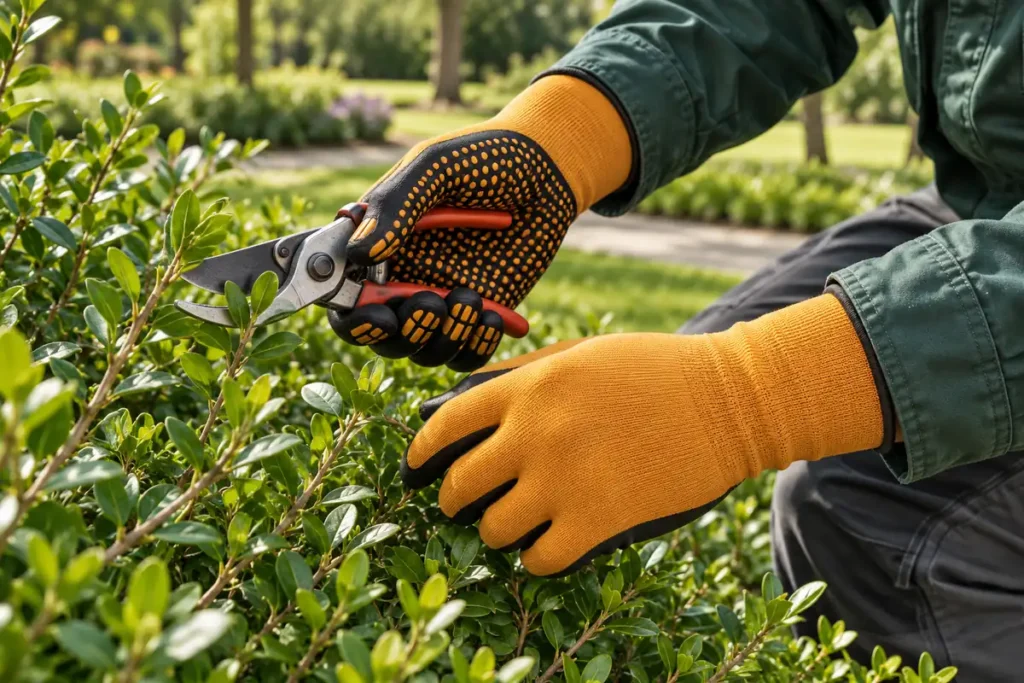
This guide is for professional landscapers, grounds crews, contractors, and buyers sourcing gloves for a team. Use the task map below to shortlist glove features, then confirm fit and performance with a wear trial in your own conditions.
Quick Answer: Which Landscaping Work Glove Fits Each Job?
| Landscaping task | Prioritize | Check before issue |
|---|---|---|
| Raking, edging and routine tool handling | Secure grip, dexterity, comfortable fit | Can you control tool handles without bunching or slipping? |
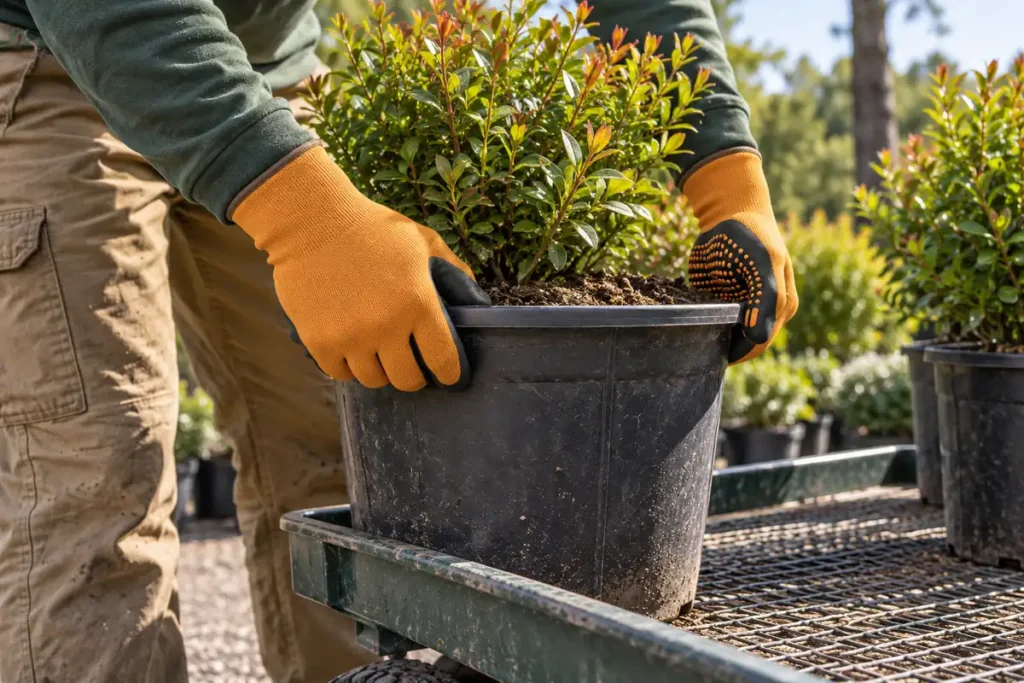
| Planting, potting and nursery work | Touch sensitivity, breathability, soil-shedding cuff | Can workers pick up small items and remove the gloves easily? |
| Pruning shrubs and clearing brush | Coverage, abrasion resistance and task-appropriate cut or puncture protection | Are the palm, fingers, back of hand and cuff covered for the identified hazards? |
| Moving pavers, stones, timber or waste | Durable palm, grip and resistance to surface wear | Does the glove remain secure when materials are dusty or damp? |
| Wet cleanup or handling damp vegetation | Grip suited to wet conditions and a coating that matches the exposure | Test on the actual tools and materials; “water-resistant” does not mean waterproof. |
Start with the Work Pattern Across the Shift
Before choosing a glove, list the jobs your crew completes in sequence. A grounds worker may rake, carry bags, prune shrubs and load branches before lunch. Each task loads the glove differently: repeated handle pressure can cause rubbing, damp debris can change grip, and brush may scrape the back of the hand or catch at the cuff. A single broad label such as “gardening glove” does not tell you whether the design fits that route.
For a small crew, keep a light-duty pair for dexterous work and a more protective pair for rough handling. For larger teams, assign glove types by task or work zone and make the distinction clear through labels or color coding.
Choose Features for the Job You Actually Do
For repetitive tool use: grip and fit come first
When you use rakes, shovels, edging tools or hand pruners for long periods, a glove that is too loose can fold at the palm and interfere with control. A glove that is too tight can restrict movement and increase pressure at the fingertips. Check that the fingertips reach the ends without excess fabric and that the wrist stays secure during repeated opening and closing of the hand.
For dry routine work, a palm-coated knit glove may balance grip and flexibility. Textured latex, nitrile or other coatings should be evaluated on the actual handle surface; coating names alone do not guarantee the same grip on dusty, wet or sap-covered tools.
For pruning and brush clearing: assess both hand and cuff exposure
Thorns, stiff stems and rough branches can contact more than the palm. Consider the fingers, back of hand and wrist opening, and choose coverage that matches the brush and the way it is handled. A cut-resistant rating addresses a defined test method; it does not by itself establish resistance to punctures from thorns, splinters or sharp plant material. Where those hazards matter, verify relevant test data and trial the glove with the real task.
Gloves do not replace safe pruning technique or appropriate tools. Workers should avoid grabbing thorny cuttings blindly and should use tools or containers that reduce direct hand contact.
For stone, paver and timber handling: watch wear and load
Moving rough or heavy materials can wear through a thin coating and stress seams. Check abrasion performance, palm coverage and whether the glove remains secure when the load is dusty or damp. If the material has sharp edges, assess cut hazards separately from abrasion and grip.
For wet grounds work: test the contact surface
Water, mud, plant residue, and cleaning products can change how a tool feels in the hand. “Water-resistant” describes a limited material or design property; it should not be read as chemical protection or waterproof performance. Test gloves with the exact tools and materials, and replace them if the coating is damaged, the liner is saturated, or grip has deteriorated.
How to Run a Practical Crew Wear Trial
- Pick representative tasks. Include the most common job and the task that causes the most glove wear or hand complaints.
- Test more than one size. Let workers check fingertip reach, palm bunching, cuff security and tool control.
- Record task results. Note grip, dexterity, heat buildup, snagging, cleaning time and visible damage at the end of the shift.
- Set replacement triggers. Define when to remove a glove for a torn liner, worn coating, damaged seam or loss of grip.
- Review after changes. Reassess if tools, plant material, weather, chemicals or work methods change.
Buying Landscaping Gloves for a Team
If you are an importer, distributor or employer purchasing at volume, translate the job assessment into a specification rather than ordering by color or a generic “heavy-duty” label. Share the main tasks, contact materials, wet or dry conditions, expected wear period, size range, coating preference, packaging and any branding needs with your supplier.
- Request samples in the size range your crew will use and conduct a documented field trial.
- Ask for the exact product data and test reports for the supplied model; do not assume a similar-looking glove has the same rating.
- Confirm carton quantity, size assortment, color availability, logo method, lead time and change-control process.
- Keep separate specifications for light tool work and rough brush/material handling if their hazards differ.
See Everpro’s yard and landscaping gloves for available product styles. For a breathable, flexible option to evaluate in routine tool handling, review the PT-N1801 half-nitrile work glove. For rougher outdoor jobs, compare the HG-L103 crinkle-latex glove. Confirm current specifications and test documentation with Everpro before placing a bulk order.
Frequently Asked Questions
What are the best work gloves for landscaping?
Choose according to the task. For repetitive tool use, prioritize fit, grip and dexterity. For brush clearing or rough material handling, assess coverage and abrasion, cut or puncture hazards separately. A crew doing mixed work may need more than one glove type.
Are nitrile-coated gloves good for landscaping?
They can be suitable for selected dry or damp tool-handling tasks when the fit and grip work on the actual surface. They are not automatically suitable for thorn protection, chemical handling or every wet condition. Check the glove’s documented properties and test it on the job.
Do landscaping gloves protect against thorns?
Protection depends on the glove construction and the thorn hazard. A cut rating alone does not prove puncture resistance. Check coverage and relevant test data, and use tools and handling methods that reduce direct contact.
Should landscaping crews use one glove for every task?
Usually, task-specific selection is more practical when jobs differ substantially. A glove optimized for dexterity may wear quickly during brush clearing, while a more protective glove may make small-item handling harder.
What should a buyer request from a landscaping glove supplier?
Request samples, current product specifications and test reports, available sizes, packaging details, customization options, lead time, and confirmation that the delivered model will match the approved sample.


