
When you select impact resistant gloves for oil and gas work, you are rarely dealing with one hazard. A worker may handle oily pipe, sharp metal edges, and heavy tools during the same task. The glove therefore has to combine suitable back-of-hand protection with grip, cut resistance, durability, fit and the right level of liquid coverage.
The appearance of a thermoplastic rubber guard does not tell you how well a glove performs. You need documented test results for the exact model and a workplace trial that reflects the real operation. This guide shows you how to build that specification without sacrificing the hand movement operators need.
Quick Answer
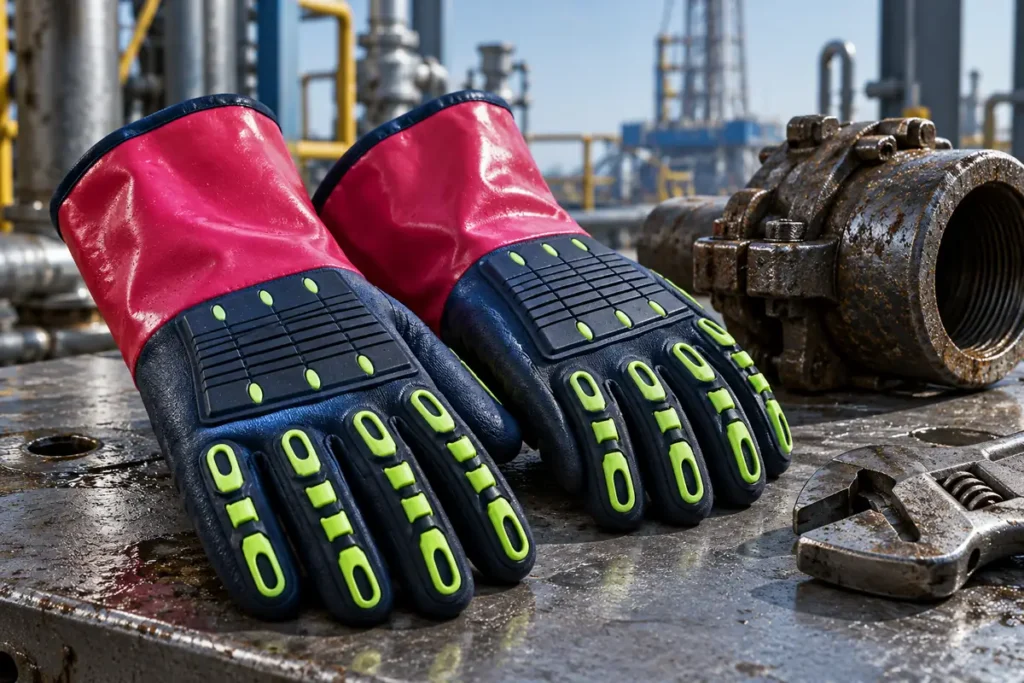
Start with the task. Identify where the hand can be struck, trapped or crushed; then check whether the glove has a documented impact rating. For North American procurement, ANSI/ISEA 138 classifies industrial impact resistant gloves at Performance Levels 1, 2 and 3, with Level 3 representing the highest performance within that standard.
Next, match the palm to the working surface. Textured nitrile is a useful option for oily tools and components, while the liner should provide the cut resistance required by sharp edges. Confirm that the TPR or other protective material covers the knuckles, fingers, and thumb areas exposed in the job. Finish with size and dexterity trials using the actual tools.
Why Oil and Gas Tasks Need a Combined Assessment
Oil and gas operations include drilling, pipe handling, mechanical maintenance, valve work, material transfer and equipment servicing. Each job creates a different combination of hazards. A generic “oilfield glove” description is too broad for final approval.
Your assessment should consider:
- Strikes from tools, couplings or moving components
- Pinch and crush points during alignment and handling
- Oily, wet or greasy contact surfaces
- Burrs, wire rope and sharp metal edges
- Abrasion from pipe, cable and rough equipment
- Chemical or process fluid contact
- Heat, cold and outdoor conditions
- Required finger control and wear duration
OSHA requires hand protection selection to be based on the performance characteristics of the glove relative to the task, conditions, duration and identified hazards. That principle is especially useful when several risks exist at once.
Understand ANSI/ISEA 138 Impact Levels
ANSI/ISEA 138 was created for impact-resistant industrial gloves. It defines a test method, three performance levels and a pictogram marking system. The test evaluates impact performance over the knuckle and finger/thumb areas.
| Performance level | Relative meaning | Purchasing approach |
|---|---|---|
| Level 1 | Entry level impact performance | Consider for lower impact tasks after hazard assessment |
| Level 2 | Intermediate impact performance | Consider where a stronger balance of protection and movement is needed |
| Level 3 | Highest level within ANSI/ISEA 138 | Consider for more demanding impact exposure where the assessment supports it |
Do not select a level from job title alone. A higher level may use more protective material and can affect flexibility. Your goal is the performance appropriate to the exposure while preserving safe tool control.
Ask the supplier for the laboratory report or certificate for the exact model, construction and size range being quoted. A TPR label, a similar appearance or a result from another product is not equivalent to model specific evidence.
Check the Location and Design of the Impact Guards
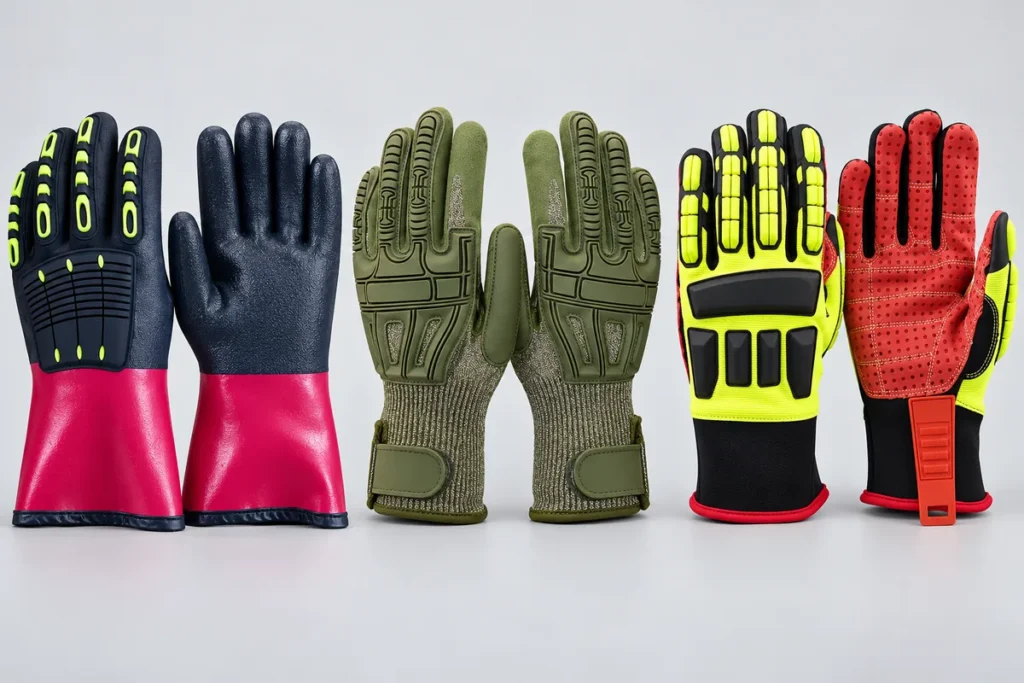
Impact material must sit over the areas that can be hit. Review the back of hand design while the glove is flat and while it is gripping a tool.
Knuckle coverage
The main knuckle area should remain covered as the hand closes. Large gaps may leave vulnerable zones, while an overly rigid plate can resist normal movement.
Finger and thumb coverage
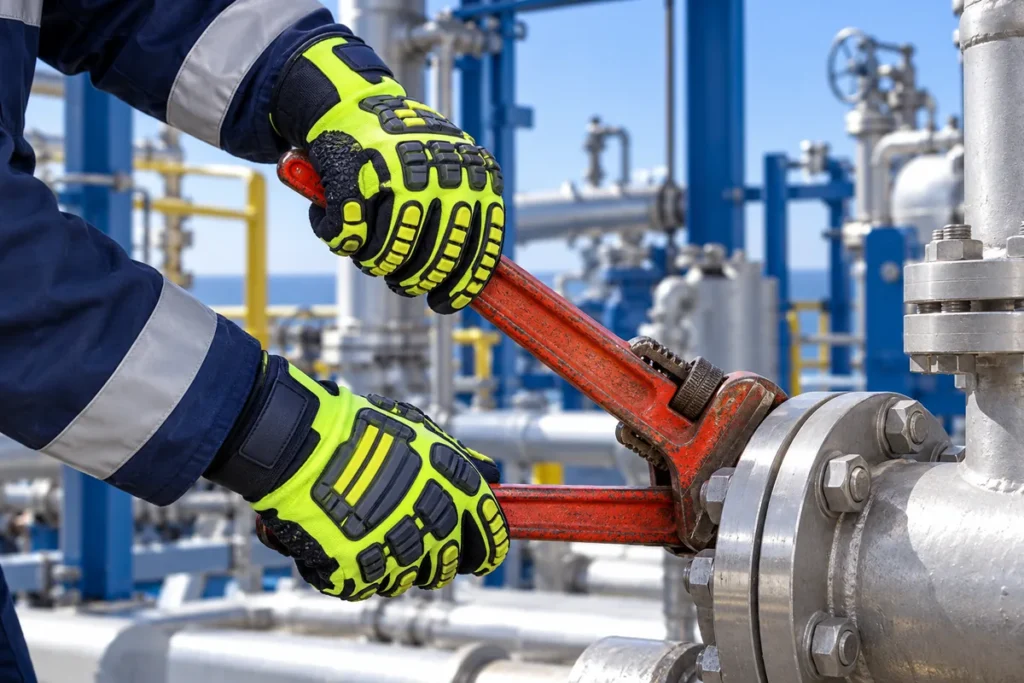
Segmented guards can follow the fingers as they bend. Check the fingertips, finger joints and thumb because the task may expose these areas differently.
Guard attachment
Look for secure bonding or stitching. Inspect samples after repeated flexing to see whether edges lift, sections crack or the glove twists around the hand.
Flex channels
Spaces between TPR segments allow movement. Their shape and placement should support the actual grip without opening large exposed areas.
You can compare several constructions in the Everpro TPR anti impact glove category.
Match the Palm to Oily Tools and Components
Back of hand protection cannot compensate for poor grip. A glove that slips on pipe, tools or couplings can add handling effort and reduce control.
Textured sandy nitrile is commonly used for oily environments because its surface provides a pronounced contact texture. Coating thickness, formulation and coverage all affect performance. A palm coating supports breathability, while three-quarter, full or double coating provides more extensive contact coverage.
Test the exact glove with your process oil and representative tools. A dry catalog demonstration does not reproduce oil viscosity, contamination level, temperature or component geometry.
The heavy duty oil resistant nitrile coated TPR impact gloves provide one example of a construction that combines nitrile coverage with back of hand TPR protection.
Remember that oily grip and chemical protection are different requirements. If a process fluid presents a chemical hazard or involves prolonged contact, verify permeation, degradation and breakthrough information for that substance. A general coated impact glove should not be assumed to provide universal chemical protection.
Add the Correct Cut Protection
Pipe threads, sheet metal, wire rope and damaged equipment can create cut or puncture hazards. Impact guards mainly protect the back of the hand from blows; they do not automatically provide cut resistance.
Select a liner with a documented ANSI/ISEA 105 or EN ISO 13997 cut result appropriate to the task. Materials may include HPPE, UHMWPE, steel fiber, glass fiber or engineered yarn blends. Verify the result for the complete glove rather than judging the liner by fiber name.
Higher cut resistance can change thickness and finger feel. If operators handle small fasteners, gauges or controls, include those actions in the sample trial. For a combined design, review the TPR cut resistant mechanic gloves and the A5 green TPR impact gloves.
Evaluate Fit and Dexterity
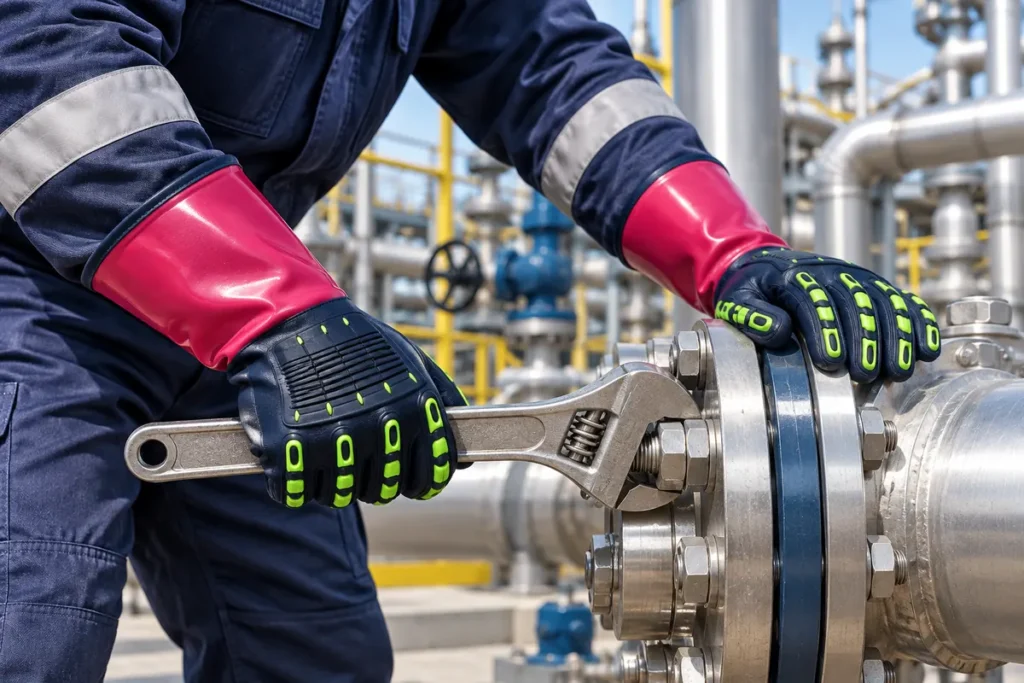
A protective glove must stay correctly positioned. If it is too loose, the TPR can shift away from the knuckles and loose palm material can interfere with grip. If it is too tight, hand movement and circulation may be restricted and fatigue can increase.
During fitting, check that:
- The finger length matches the worker’s hand
- TPR segments align with the finger joints and knuckles
- The palm does not bunch around a wrench or handle
- The cuff or wrist closure stays secure
- The thumb moves through the required range
- The worker can operate controls and handle small parts
- The size range covers the whole workforce
An adjustable wrist closure may improve retention in active tasks. A knit wrist may be suitable where comfort and easy movement matter. Choose the cuff after considering debris, liquid and wrist exposure.
Run a Controlled Workplace Trial
You can learn more from a structured trial than from an isolated comfort check. Select a small group of candidates that already meet your minimum documented requirements.
Suggested trial process
- List the impact, cut, grip, liquid and environmental requirements.
- Confirm model specific reports and product construction.
- Issue correct sizes to trained operators.
- Use normal procedures with representative tools and components.
- Record grip security, finger control, fatigue, heat and pressure points.
- Inspect TPR alignment, attachment, coating wear and seam condition.
- Compare results across shifts and more than one operator.
- Estimate usable service life and cost per shift.
Do not create an impact event to test a glove on a worker. Laboratory ratings and controlled work observation serve different purposes. The workplace trial should evaluate usability and durability within established safe procedures.
Inspect Gloves Before and During Use
Train workers to examine both sides of the glove. The palm coating should be free from tears, severe abrasion, swelling or delamination. TPR elements should remain attached and flexible without major cuts or missing sections. Seams, thumb crotches, fingertips and cuffs deserve special attention because they often experience repeated stress.
Remove a glove from service if damage, contamination, or loss of fit can affect its protective function. Follow the manufacturer’s cleaning guidance; washing methods, solvents and heat may change coating, liner or TPR performance.
Build a Clear Purchasing Specification
A useful request for quotation should include more than “oilfield impact glove.” State:
- Task and working environment
- Required impact standard and performance level
- Required cut, abrasion and puncture performance
- Palm coating material, texture and coverage
- Liner material and glove construction
- Required sizes and cuff style
- Color and visibility requirements
- Chemical or liquid contact details
- Test report and certificate requirements
- Sample quantity and trial plan
- Packaging, MOQ, logo and label needs
- Production and repeat order expectations
This information lets manufacturers compare products against the same requirement. Everpro supports bulk and OEM requests through its work gloves wholesale service. For model recommendations and samples, use the Everpro contact page.
Frequently Asked Questions
What does ANSI/ISEA 138 measure?
ANSI/ISEA 138 provides a test and classification system for impact-resistant industrial gloves. It evaluates back-of-hand impact performance at the knuckle and finger/thumb areas and reports one of three performance levels.
Is ANSI/ISEA 138 Level 3 always the best choice?
Level 3 is the highest performance level in the standard, but selection should follow the task assessment. You must also consider movement, grip, cut risk, exposure duration, and worker fit.
Does TPR automatically make a glove impact certified?
No. TPR describes a type of material, and different designs can perform differently. Request a test report for the exact glove model and claimed standard.
Are impact gloves also cut resistant?
Only if the complete glove includes a suitable cut-resistant construction and has a documented cut rating. Impact and cut performance are separate properties.
What palm coating works for oily oilfield tasks?
Textured nitrile, including sandy nitrile, is a common candidate for oily grip. Test it with the actual oil, tool and component because formulation, coverage and working conditions affect performance.
Can an oil resistant impact glove protect against chemicals?
Do not assume that it can. Grip around oil and chemical permeation protection are different requirements. Identify the chemical and verify compatibility data for the exact glove and exposure.
How should you compare samples from different suppliers?
First confirm that every model meets the same minimum documented ratings. Then use the same sizes, operators, tools, liquids, and tasks, and record usability plus physical wear over a defined period.
When should an impact glove be replaced?
Replace it when TPR is missing, cracked or detached; the palm coating is torn or delaminated; seams fail; contamination cannot be safely removed; or the glove no longer fits and functions as intended.
Select the Whole Glove, Not One Feature
The right impact-resistant gloves for oil and gas combine verified back of hand protection with the grip, cut resistance, coverage and fit required by the task. Define the hazards first, check model-specific test documents, and complete a controlled workplace trial. This gives your operators a glove they can use effectively and gives procurement a specification that can be repeated across future orders.
-300x300.webp)


