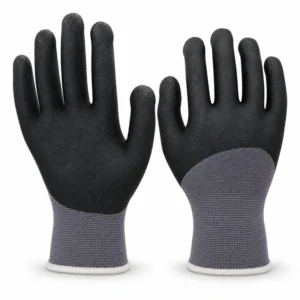
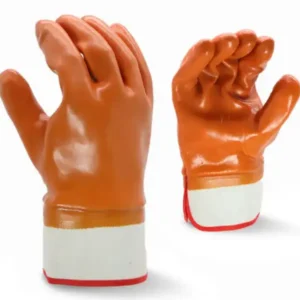
When temperatures fall, you need more from a work glove than a warm lining. The right winter work gloves must help you keep your hands warm and dry while preserving enough grip, dexterity, and mechanical protection to complete the task safely. For a buyer, the useful question is not “Which glove is warmest?” It is “Which glove stays usable through this crew’s complete work cycle?”
A thick glove is not automatically the best cold weather glove. Too much bulk can reduce tool control, while a tight glove can restrict movement and leave too little space for insulating air. Water, wind, workload, and contact with cold metal also change what you need. This guide gives you a practical way to compare winter gloves for outdoor construction, logistics, maintenance, cold storage, and other industrial applications.
Quick Answer: What Should You Look for in Winter Work Gloves?
Start with the cold exposure, moisture, and activity pattern. For dry outdoor handling, a brushed acrylic or fleece liner with a textured palm coating may provide warmth, breathability and grip. For snow, slush, refrigerated products or frequent wet contact, evaluate a waterproof or more extensively coated construction. Then add the cut, abrasion, puncture or impact performance required by the task.
Your specification should cover six points:
- Expected temperature, wind and exposure time
- Dry, damp, wet or immersed conditions
- Insulation type and thickness
- Palm grip and coating coverage
- Required dexterity and glove fit
- Mechanical or chemical hazards
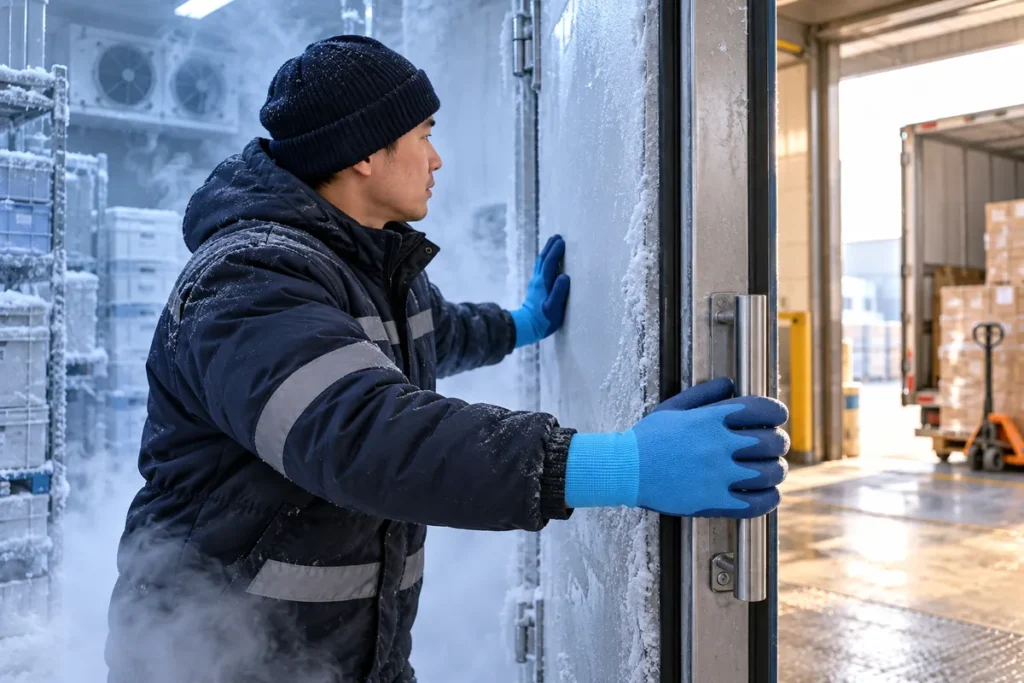
NIOSH notes that insulated PPE can help in cold conditions when it remains dry. It also warns that very tight gloves can increase frostbite risk, while excessive insulation during heavy work may promote sweating and later cooling. This makes fit, moisture control, and workload part of glove selection.
Assess the Cold Environment Before Choosing a Glove
The air temperature alone does not describe the full exposure. Wind can increase heat loss outdoors, and contact with cold metal can cool the hand locally. Wet gloves lose comfort and may lose insulating performance, depending on their materials.
Record these conditions before requesting samples:
- Lowest and typical working temperature
- Indoor cold room or outdoor weather
- Wind, rain, snow, slush and condensation
- Length of one work period before a warm break
- Light, moderate or heavy physical workload
- Contact with metal, ice, frozen food or liquids
- Need to operate controls, fasteners or touchscreens
- Other hazards such as cuts, impact or chemicals
OSHA advises employers to use manufacturer information and employee feedback when selecting hand protection for cold environments. A workplace trial should therefore be part of your decision.
Map the Whole Shift, Not One Temperature
Cold exposure changes during a shift. A warehouse picker may move repeatedly between a heated staging area, a loading dock, and a freezer. An outdoor crew may work hard while carrying materials, then stand still during setup. The same glove can feel comfortable during active work and inadequate during a stationary period, or warm while dry and cold after sweat accumulates.
Build a short exposure map before comparing products:
| Work phase | What changes | What to evaluate |
|---|---|---|
| Active handling | Body heat and sweat rise | Breathability, grip and dexterity |
| Stationary work | Heat production falls | Insulation and wind protection |
| Indoor/outdoor transition | Temperature and condensation change | Moisture management and drying |
| Direct cold contact | Heat transfers into metal or frozen goods | Contact insulation and palm durability |
| Wet interval | Snow, water, or product moisture reaches the glove | Coating coverage, cuff and spare-pair plan |
This exposure map is more useful than assigning one generic temperature label to every worker. It also helps you decide whether one glove is enough or whether a crew needs separate dry-cold and wet-cold options.
Read EN 511 Without Treating It as a Temperature Guarantee
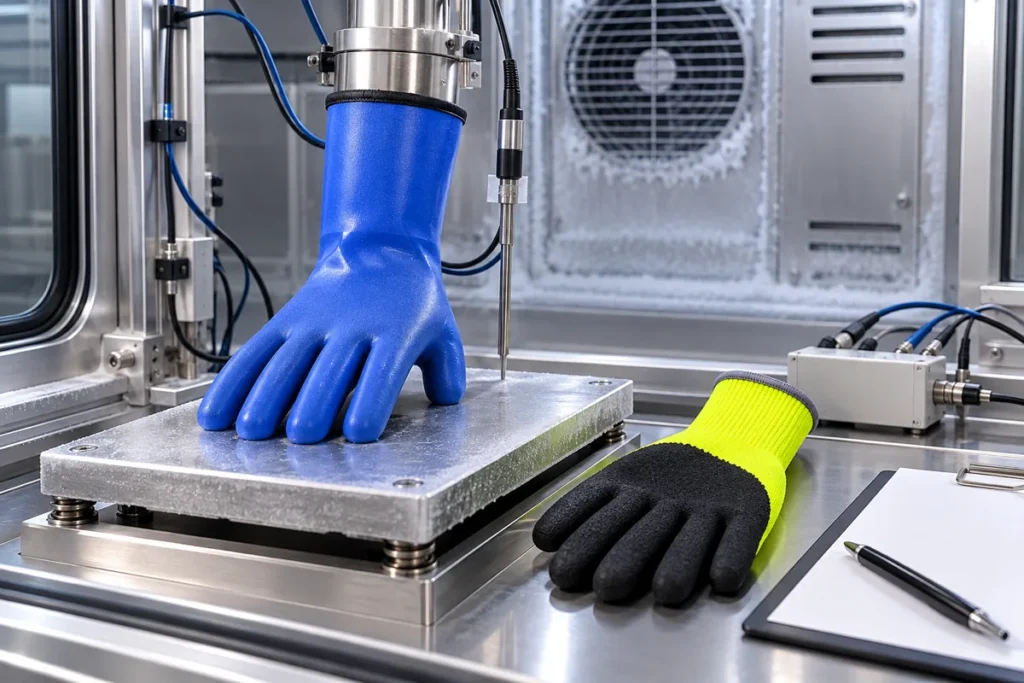
EN 511 evaluates protective gloves against cold using three reported positions: convective cold, contact cold, and water penetration. The first two positions use performance levels, while the water result indicates performance in the specified test. An X means a property was not tested or no result is declared.
| EN 511 position | What it addresses | Buyer question |
|---|---|---|
| First | Convective cold | How does the glove perform against surrounding cold air? |
| Second | Contact cold | What happens when the hand contacts a cold solid surface? |
| Third | Water penetration | Was water penetration resisted in the specified test? |
An EN 511 marking is a laboratory classification, not a universal statement that a glove is safe or comfortable at a specific temperature. Actual suitability still depends on wind, moisture, exposure time, workload, fit, and the other hazards present. Ask for documentation tied to the exact insulated model; a test for a visually similar glove or an unlined version is not a substitute.
EN 511 also does not replace mechanical hazard assessment. Use the relevant EN 388 or ANSI/ISEA 105 data when the work involves abrasion, cuts, tears, or punctures.
Understand Insulation Materials and Construction
Insulation traps air and slows heat transfer. Its performance depends on fiber, loft, thickness, moisture and compression during grip.
Acrylic and brushed acrylic liners
Acrylic knit is widely used in winter work gloves because it can provide warmth with flexible construction. Brushed or napped surfaces create additional loft. A 7 or 10 gauge liner is generally thicker than a fine gauge liner, but gauge alone does not prove thermal performance.
Fleece and polyester linings
Fleece and brushed polyester can feel soft and warm and are common inside fully coated waterproof gloves. Check whether the lining remains secure when the worker removes a damp hand; loose linings can make repeated donning difficult.
Double liners
A double liner can separate the protective outer shell from the warming inner layer. This design may increase warmth and comfort but can add bulk. Test finger movement and liner stability during repeated use.
Synthetic leather and insulated mechanic gloves
These gloves can combine reinforcement, close fit, and back-of-hand features. They may suit equipment operation and maintenance where dexterity is important. Their water resistance depends on the complete construction, seams and materials.
Avoid comparing insulation by material name alone
Two gloves described as “fleece lined” can perform differently because liner weight, loft, compression, seams and outer-shell wind resistance are different. Request construction details and test results where available, then compare finished-glove samples. Do not create an unsupported temperature claim from insulation material or thickness alone.
Browse the Everpro winter work gloves category to compare available constructions.
Decide How Much Water Protection You Need
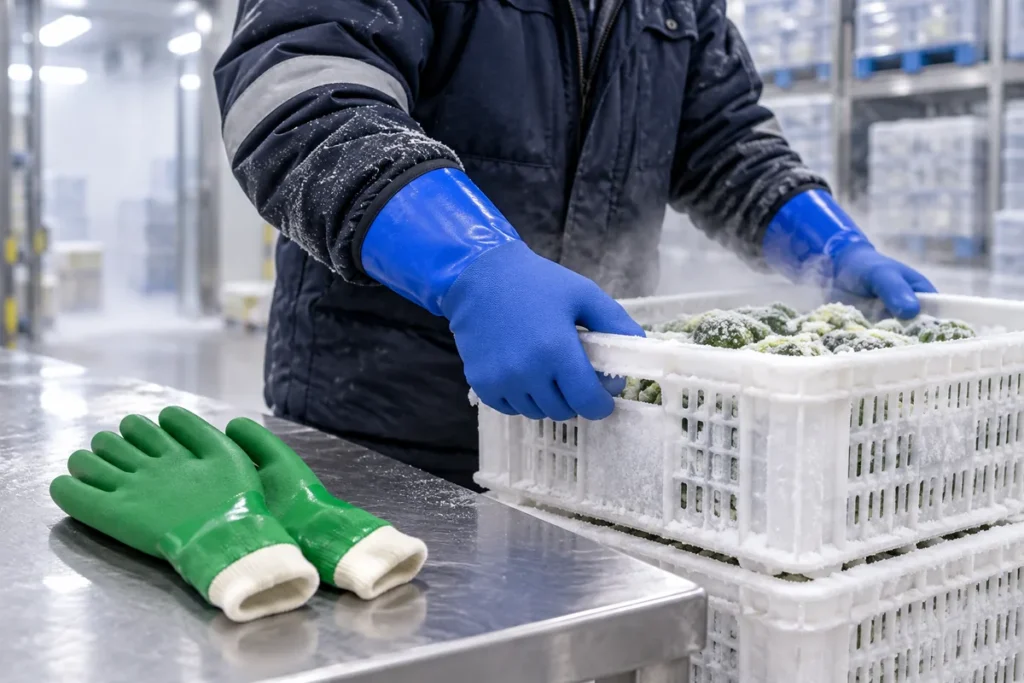
Warmth and waterproofing solve different problems. An open-back palm-coated glove can breathe well, but snow or water may reach the liner. A fully coated glove creates broader liquid coverage but may trap heat and moisture inside.
| Exposure | Practical starting point | Main check |
|---|---|---|
| Dry cold | Insulated knit glove with palm coating | Warmth, grip and breathability |
| Occasional damp contact | Three-quarter or water-resistant coating | Side and back coverage |
| Snow, slush and frequent wet handling | Fully coated insulated glove | Waterproof construction and cuff |
| Liquid contact or washdown | Purpose-selected liquid-resistant glove | Compatibility, seams and exposure time |
Do not assume a blue PVC or nitrile coating makes every glove suitable for every liquid. If chemicals are involved, identify the substance and verify chemical resistance for the exact glove.
Match the Palm Coating to the Surface
Cold weather changes both the surface and the user’s hand movement. You may be holding wet lumber, frosted pipe, smooth cartons, or greasy equipment.
Crinkle latex
Crinkle latex provides a pronounced surface texture and is commonly used for construction, masonry, lumber and general outdoor handling. It can offer strong dry and damp grip. Check latex-related workplace requirements before selection.
Sandy nitrile
Sandy nitrile is a useful candidate for oily or wet industrial components. Its texture can support control while nitrile offers a durable contact surface. Compare its low-temperature flexibility and actual grip with your process materials.
Foam nitrile
Foam nitrile can support dexterity and light liquid management. It may suit assembly and logistics, but an open-back foam nitrile glove is not a waterproof winter glove.
PVC
PVC is used in fully coated insulated gloves for wet, cold, and messy handling. Coating formulation affects flexibility at low temperatures, so bend and grip tests should be completed at the intended temperature.
Balance Warmth with Dexterity

More insulation can increase warmth but may reduce finger control. If workers remove bulky gloves to complete fine tasks, the selected glove is not supporting the real workflow.
Include these actions in sample testing:
- Gripping the actual tool handle
- Picking up small fasteners
- Operating buttons, levers, and scanners
- Opening packaging and handling labels
- Climbing ladders or holding rails
- Donning and removing the glove repeatedly
Measure fit across the workforce. The fingertips should reach the glove ends without excessive empty material, while the glove should not compress the hand. The palm should remain stable instead of bunching around a handle.
For touchscreen tasks, confirm performance on the actual device in cold conditions. A touchscreen claim does not guarantee reliable operation through moisture, ice, or every screen type.
Add Protection for the Job Hazards
Insulation does not automatically provide cut, puncture, abrasion, or impact protection. These properties require their own materials and test evidence.
For metal handling, select a winter glove with a documented cut rating appropriate to the sharp edges. Construction and material handling may require abrasion and puncture resistance. Heavy equipment maintenance may justify back-of-hand impact protection. Chemical contact must be assessed separately using compatibility information for the substance.
Check the report for the exact finished glove. Do not transfer the rating of an unlined summer glove to an insulated version unless the insulated version has corresponding documentation.
Compare Common Winter Glove Types
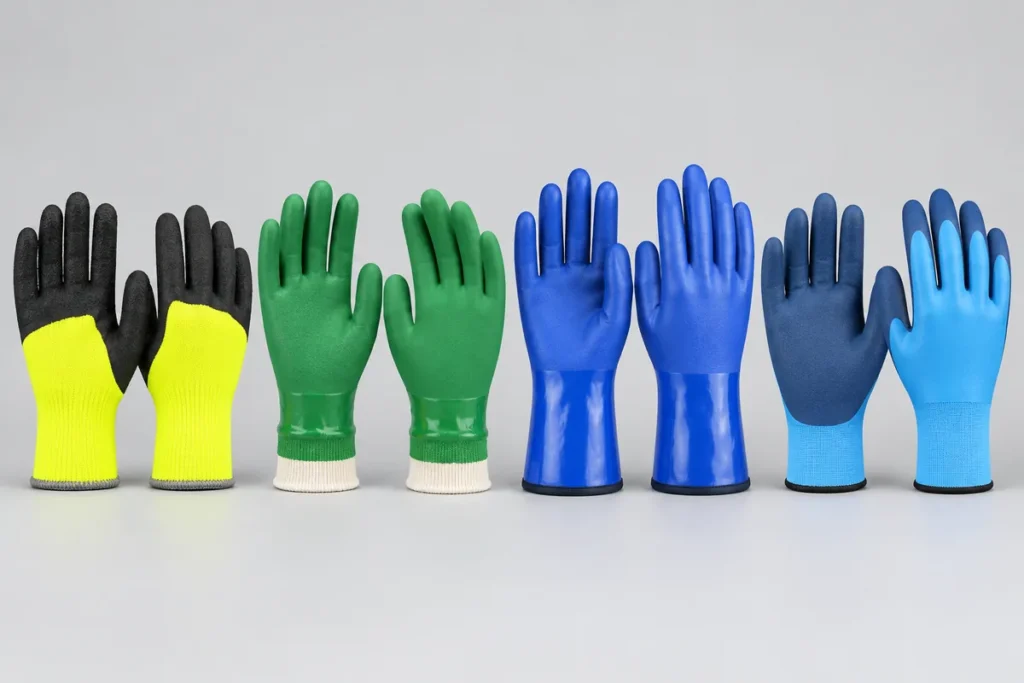
| Glove type | Strength | Limitation to check | Typical applications |
|---|---|---|---|
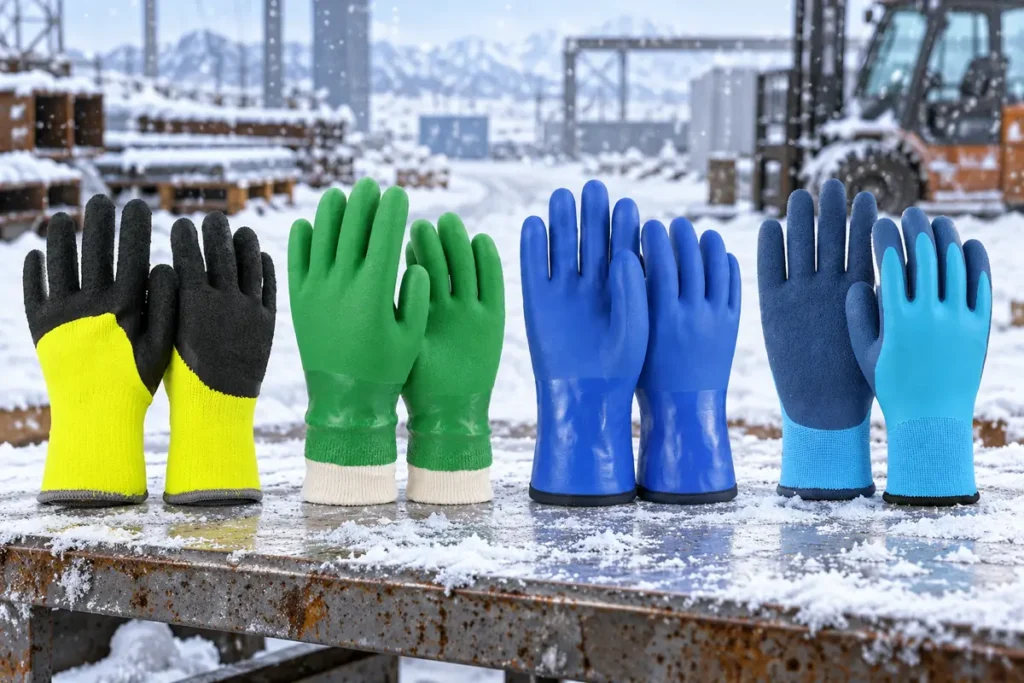
| Acrylic liner with latex palm | Grip, warmth and flexibility | Open back allows moisture entry | Construction, lumber, landscaping |
| Thermal liner with sandy nitrile | Oily grip and durability | Coverage and low-temperature flexibility | Maintenance, logistics, machinery |
| Fully coated insulated PVC | Broad water and dirt coverage | Bulk, sweat and dexterity | Cold storage, fishing, wet handling |
| Blue double-coated glove: smooth full-dip base plus dark crinkle palm dip | Dexterity, liquid coverage and textured palm grip | Confirm insulation and low-temperature performance | Logistics, cold storage, outdoor handling |
The table is a starting point. Final selection depends on the exact product construction and trial results.
Choose by Job Group Instead of One Company-Wide Model
Standardizing one glove can simplify inventory, but it may also create unnecessary bulk for one crew and insufficient moisture protection for another. Group users by exposure and handling task before ordering samples.
| Job group | Main winter challenge | Practical specification direction |
|---|---|---|
| Outdoor construction | Wind, snow, rough materials | Insulated textured grip, suitable cuff, required mechanical ratings |
| Loading dock and logistics | Frequent transitions and scanning | Moderate insulation, dexterity, secure carton grip |
| Cold storage picking | Sustained cold and frozen packages | Verified cold performance, flexible grip, dry-pair rotation |
| Wet food or fish handling | Cold liquid and sanitation | Fully coated construction selected for the liquid and cleaning process |
| Winter maintenance | Cold metal, oil, and tools | Insulation, oil-grip palm and task-specific cut or impact protection |
This segmentation gives procurement a defensible reason for carrying two or three specifications instead of forcing every department into the same product.
Test Samples in the Actual Temperature
A glove that feels flexible in an office may become stiff in a freezer or outdoors. Condition the samples at the intended workplace temperature before comparison.
Suggested trial process
- Confirm minimum warmth, liquid coverage, and safety requirements.
- Provide each participant with the correct size.
- Test gloves during a normal work period using established procedures.
- Record hand warmth, moisture, grip, finger control, and pressure points.
- Check whether the coating stiffens, cracks, or loses grip.
- Inspect liner movement, seams, cuffs, and coating wear.
- Ask whether workers needed to remove the gloves for routine tasks.
- Compare service life and cost per shift instead of unit price alone.
Use a simple 1-to-5 score for warmth, internal moisture, grip, finger control, cuff security, and ease of donning. Record any glove removal during routine work as a separate event. Averages alone can hide a serious problem, so also review the lowest score and the reason behind it.
| Trial measure | Question to ask | Failure signal |
|---|---|---|
| Warmth | Do fingers remain functional through the work phase? | Numbness, discomfort, or early glove removal |
| Moisture | Does the inside remain acceptably dry? | Wet liner, sweat accumulation, or slow drying |
| Grip | Can the worker control the real object? | Slipping or excessive grip force |
| Dexterity | Can routine controls and parts be handled? | Glove removal or repeated errors |
| Fit | Does the glove stay correctly positioned? | Bunching, pressure, or liner pullout |
| Durability | Does the construction remain intact? | Cracks, delamination, seam opening, or compressed liner |
Have workers report numbness, pain, tingling, or loss of coordination promptly according to the workplace cold stress program. Gloves are one control within a broader plan that also includes training, warm breaks, dry clothing, and exposure management.
Choose the Right Cuff
A knit wrist holds the glove in place and helps limit debris entry. It works well for many dry construction and warehouse tasks. A safety cuff is easier to remove and can provide wrist coverage. A gauntlet cuff extends farther over clothing and may suit snow, splash, or wet handling.
Check the cuff together with the jacket sleeve. A gap can expose the wrist, while a bulky overlap may interfere with movement. Fully coated cuffs should still allow workers to remove the glove when needed.
Care, Drying and Replacement
Inspect winter gloves before each use. Replace them when the coating cracks, the liner is torn or compressed, seams open, insulation stays wet, or grip deteriorates. Contaminated gloves require handling appropriate to the substance involved.
Dry reusable gloves according to the manufacturer’s instructions. Excessive heat can damage coatings or shrink liners. A rotation system may help workers begin each shift or work period with a dry pair. Store clean gloves away from direct heat, sunlight, and contamination.
Winter Work Glove Purchasing Checklist
Before placing a bulk order, confirm:
- Working temperature and exposure time
- Wind and moisture conditions
- Insulation and liner construction
- Palm coating, texture, and coverage
- Required cut, abrasion, puncture, or impact performance
- Size range and cuff style
- Dexterity and device operation requirements
- Test documentation for the exact model
- Sample trial at the actual temperature
- Cleaning, drying, and replacement instructions
- Package quantity, MOQ and production lead time
- Logo, label and color requirements
- EN 511 results when cold-performance certification is required
- EN 388 or ANSI/ISEA 105 results for relevant mechanical hazards
- Whether claims apply to the exact insulated production model
Everpro supports OEM and bulk purchasing through its work gloves wholesale service. Send your temperature, task, and exposure details through the Everpro contact page when requesting suitable samples.
Frequently Asked Questions
What are the best winter work gloves?
The best option matches the temperature, moisture, workload, and hazards of your task. A warm dry-construction glove may be unsuitable for a wet cold-storage job, so compare complete constructions under actual conditions.
What does EN 511 tell you about a winter glove?
EN 511 reports performance related to convective cold, contact cold and water penetration. It helps compare tested properties, but it does not provide a universal safe-use temperature. Interpret it with the task, exposure time, moisture, activity, and fit.
Are waterproof gloves always warmer?
No. Waterproof coverage helps keep external moisture away, but warmth also depends on insulation, fit, activity, and internal moisture. A glove that traps sweat can feel colder when activity stops.
Should winter gloves fit tightly?
They should fit securely without compressing the hand. Excessively tight gloves can restrict movement and reduce the insulating air space. Loose gloves can reduce tool control and allow the liner to shift.
Which coating is best for snow and wet work?
A fully coated PVC, nitrile, or other purpose-designed waterproof construction may be appropriate. Verify low-temperature flexibility, grip, and liquid resistance for the exact exposure.
Can insulated gloves also be cut resistant?
Yes, if the finished glove includes a cut-resistant construction and has a documented rating. Insulation alone does not establish cut protection.
How do you test cold weather glove samples?
Condition and use them at the intended temperature with actual tools and materials. Record warmth, dryness, grip, dexterity, fit, and physical wear across several workers and shifts.
How many pairs should each worker receive?
The number depends on moisture, drying time, contamination, and replacement frequency. Wet environments may require rotation so a dry, serviceable pair is available when another pair is drying.
When should winter work gloves be replaced?
Replace them when damage, persistent moisture, compressed insulation, coating failure, contamination, or loss of fit prevents the glove from performing as intended.
Choose for the Entire Work Cycle
The right winter work gloves keep their balance of warmth, dryness, grip, and movement throughout the task. Define the environment, add the required mechanical protection, compare complete product data, and validate samples at the actual temperature. This produces a more reliable specification and helps workers keep their gloves on while working.