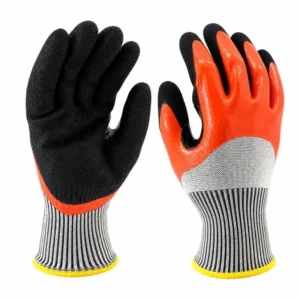
When you compare sandy nitrile vs foam nitrile gloves, both options may look similar in a product list. Each uses a nitrile-based palm coating, but the surface texture, coating formulation, thickness and finished glove construction can create a noticeably different working experience.
You will usually consider sandy nitrile when you need a more aggressive grip texture and a durable working surface. You may prefer foam or microfoam nitrile when fine handling, flexibility and long-wear comfort matter more. However, the coating name alone cannot tell you which glove will perform better in your workplace.
This guide helps you compare the two coating types, identify the factors that matter for your task and prepare a practical sample test before you place a wholesale order.
Quick Answer: What Is the Main Difference?
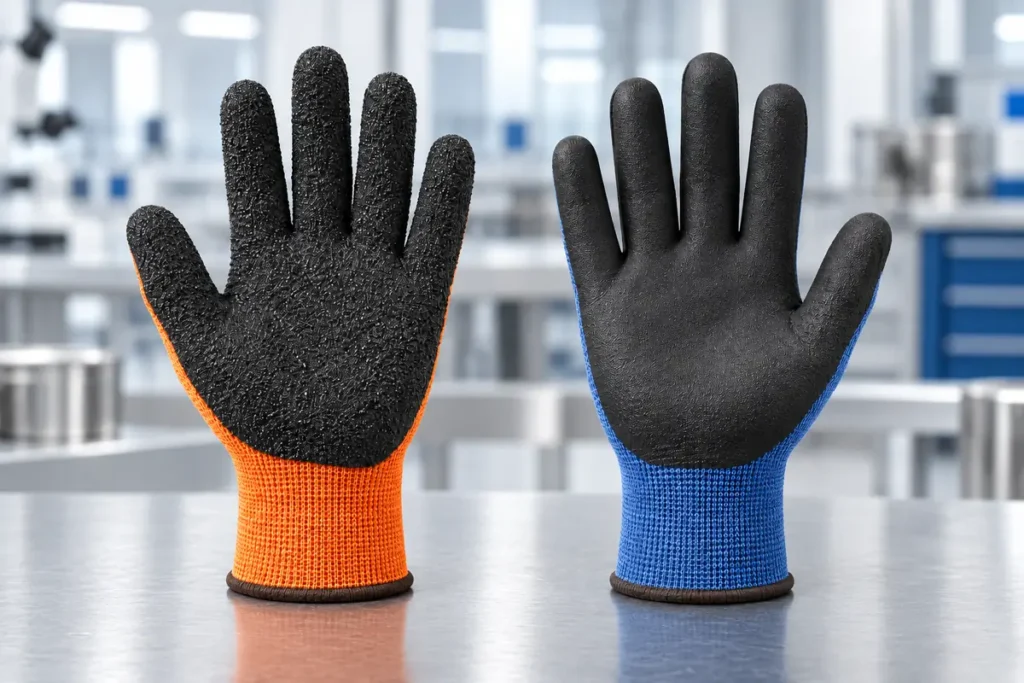
Sandy nitrile gloves have a visibly rough, grain-like coating texture that is commonly selected for secure handling and demanding general industrial work. Foam nitrile gloves use a finer, more porous-looking coating structure that is commonly selected for dexterity, breathability and precision handling.
Neither type is universally better. You should choose according to the object being handled, the amount of oil or moisture, the required fingertip control, wear conditions and relevant mechanical hazards.
Sandy Nitrile vs Foam Nitrile Gloves at a Glance
| Selection factor | Sandy nitrile coating | Foam or microfoam nitrile coating |
|---|---|---|
| Surface texture | Coarse, granular texture | Fine, microtextured surface |
| Typical priority | Grip and durability | Dexterity and comfort |
| Common tasks | Maintenance, metal handling, construction and general material handling | Assembly, inspection, packaging and precision parts handling |
| Feel | Often more substantial | Often lighter and more flexible |
| Dry grip | Commonly strong | Commonly strong |
| Light oil contact | Can provide useful textured grip; verify by task testing | Can provide controlled grip; performance varies by formulation |
| Breathability | Depends on coverage and liner | Often emphasized in palm-coated lightweight designs |
| Best way to decide | Test the exact glove on your real parts | Test the exact glove on your real parts |
These are general tendencies rather than guaranteed performance results. Two gloves described as “sandy nitrile” can use different formulas, coating weights and liners. The same variation exists among foam nitrile gloves.
What Are Sandy Nitrile Gloves?
A sandy nitrile glove uses a textured nitrile coating with a roughened surface. The texture increases contact points between the glove and the handled object, which can help you maintain a controlled grip on tools, components and construction materials.
You will often find this coating on general industrial gloves, cut-resistant gloves and gloves intended for maintenance or material handling. Depending on the model, the nitrile may cover only the palm, extend over the fingertips, cover three quarters of the hand or form part of a double-coating system.
When sandy nitrile may suit your work
You may prefer a sandy nitrile palm when:
- You handle medium or large metal components
- Your tools or parts may have a light oil film
- You work with rough construction materials
- You need a pronounced grip texture
- The palm experiences repeated rubbing or contact with abrasive surfaces
- You want to combine textured grip with a cut-resistant liner
Everpro’s 18-gauge sandy nitrile work glove shows how a sandy finish can also be applied to a thinner nylon and spandex liner for more precise work. This demonstrates why you should compare the whole glove rather than assuming every sandy coating is thick or heavy.
What Are Foam Nitrile Gloves?
Foam nitrile gloves use a fine-textured nitrile coating engineered to remain flexible over the palm and fingers. “Microfoam” usually describes an especially fine coating texture used on lightweight, close-fitting gloves.
These gloves are frequently chosen for assembly, inspection, component handling, warehouse work and maintenance tasks where you repeatedly pick up smaller objects. A palm-coated construction can leave the back of the hand open for ventilation, although actual comfort also depends on the liner, gauge, fit and temperature.
When foam nitrile may suit your work
You may prefer foam nitrile when:
- You handle small fasteners or precision components
- You need clear fingertip feedback
- Your workers make repeated fine hand movements
- You prioritize a lightweight, close-fitting glove
- Your task is mainly dry or involves controlled light oil contact
- You need comfortable gloves for long assembly or inspection cycles
For an example of this construction, review Everpro’s 21-gauge foam nitrile coated gloves, which combine a thin nylon and spandex liner with a microfoam nitrile palm.
Which Coating Gives You Better Grip?
Grip is influenced by more than surface texture. The result depends on the handled material, contact pressure, coating flexibility, oil level, object shape and glove fit.
Dry conditions
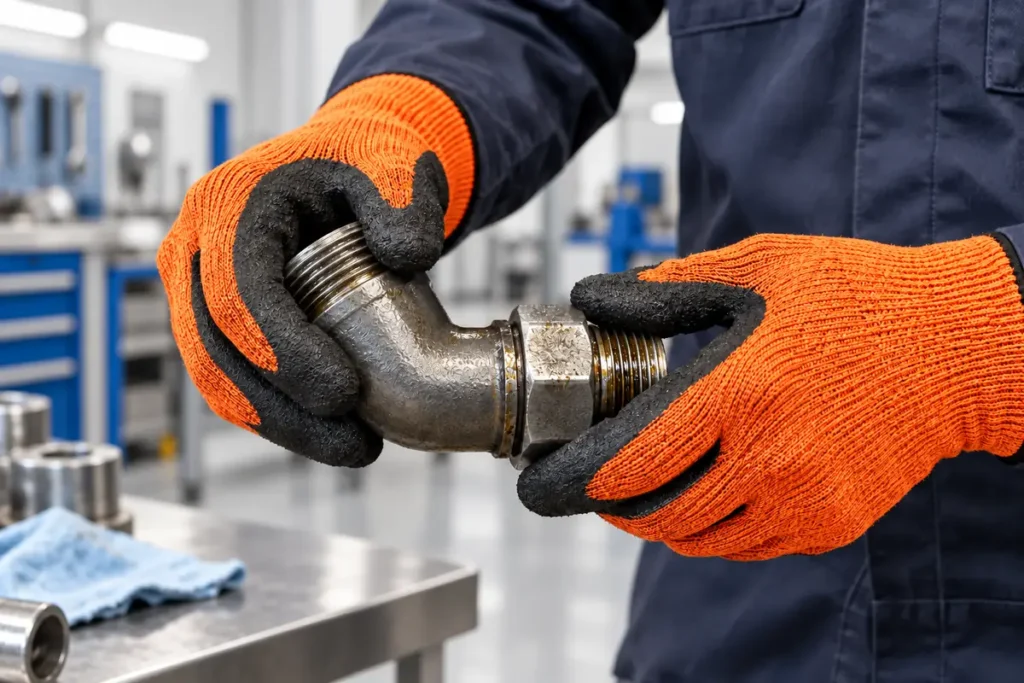
Both sandy and foam nitrile coatings can provide useful dry grip. For large tools, pipes and construction materials, you may prefer the more pronounced texture of sandy nitrile. For small components, the thinner feel of a foam nitrile glove may give you better control even when its texture appears less aggressive.
Lightly oily conditions
In light oil contact, the coating needs to maintain contact without becoming excessively slippery. Sandy finishes and foam finishes approach this through different surface structures, but their effectiveness varies between products.
Do not treat “oil resistant” and “chemical resistant” as interchangeable claims. A palm coating that helps you grip an oily component has not automatically been tested as a chemical barrier. If you face immersion, splash or chemical exposure, you need chemical permeation and degradation data for the exact substance and glove.
Wet conditions
Water, coolant and other liquids can change grip performance. Ask the manufacturer what conditions were used for any grip claim, then test samples under the actual moisture level in your process. Avoid assuming that a glove tested or marketed for light oil contact will perform the same under heavy water exposure or full immersion.
Which Coating Gives You Better Dexterity?
Foam nitrile gloves are often selected for dexterity because they are commonly paired with thin, high-gauge liners. This combination can help you feel small components and complete repeated finger movements.
However, coating type and liner gauge are separate variables. A thin sandy nitrile glove may feel more flexible than a heavily coated foam nitrile glove. When you compare dexterity, check:
- Liner gauge and yarn composition
- Total palm thickness
- Coating coverage
- Finger shape and fingertip seams
- Stretch and recovery after repeated gripping
- Correct sizing for each worker
Ask workers to perform the real task during a sample trial. Picking up washers, operating controls, threading fasteners and using hand tools will reveal more than simply bending the glove in your hand.

Which Coating Is More Durable?
Sandy nitrile is frequently chosen for tasks where the palm experiences repeated contact with rough parts. Its substantial texture may make it a practical option for maintenance and material handling. Foam nitrile is often optimized for flexibility and precision, although high-quality foam coatings can also provide strong abrasion performance.
You cannot determine service life from the coating name alone. Review the tested abrasion rating when available and run a controlled wear trial.
During your trial, record where each glove fails first:
- Fingertips
- Thumb crotch
- Center of the palm
- Coating-to-liner edge
- Knit cuff
- Liner between the fingers
Compare cost per working day or completed unit rather than cost per pair. A slightly more expensive glove may be the better value if it remains usable longer and supports better handling.
How Do Liner and Coating Coverage Affect Your Choice?
The same nitrile finish can behave differently when applied to different liners or coverage styles.
Palm coated
Palm-coated gloves leave most of the back uncoated. You may choose this construction for ventilation and flexibility in dry or controlled industrial environments.
Three-quarter coated
A three-quarter coating adds coverage around the sides and back of the fingers while leaving part of the back open. It can be useful when contact extends beyond the palm.
Fully coated
A full coating covers the knitted shell more completely. This may improve surface coverage but can also affect breathability and flexibility. Full coating does not automatically make a glove waterproof or chemically protective.
Single vs double coating
A double-coated glove may use a smoother base layer with a textured top layer. The result depends on coating thickness, coverage and cure quality. Ask for samples if you need to balance liquid contact, grip and flexibility.
You can compare available constructions in the Everpro nitrile-coated gloves category.
How You Should Test Samples Before Ordering
OSHA requires hand protection to be selected according to the task, conditions, duration and identified hazards. The official OSHA hand protection standard supports a task-based decision instead of choosing gloves only by material name.
Use the following sample procedure:
Step 1: Define the task
List the parts, tools, liquids, sharp edges, temperatures and movement involved. Identify any cut, abrasion, puncture, impact, heat or chemical hazards separately.
Step 2: Select comparable samples
Compare gloves with similar liner thickness and protection levels when possible. If one glove uses a much thinner liner, you may otherwise mistake a liner difference for a coating difference.
Step 3: Test grip
Use the real component in dry and expected working conditions. Record slips, grip force and the need to reposition the hand.
Step 4: Test dexterity
Ask users to complete a repeatable task such as picking up fasteners, operating a control or assembling a component. Record errors and completion time without encouraging workers to rush.
Step 5: Measure comfort
Collect feedback after a full working period. Check heat buildup, pressure points, cuff comfort and hand fatigue.
Step 6: Track service life
Issue each sample under similar conditions and inspect it at consistent intervals. Note coating wear, liner damage and contamination.
Step 7: Verify documentation
Request test reports for the mechanical or chemical risks that apply to your task. The report should match the exact glove construction you intend to purchase.
Sandy Nitrile or Foam Nitrile: A Task-Based Recommendation
Choose sandy nitrile gloves as your starting sample when grip texture, robust handling and contact with rough or lightly oily components are your main concerns.
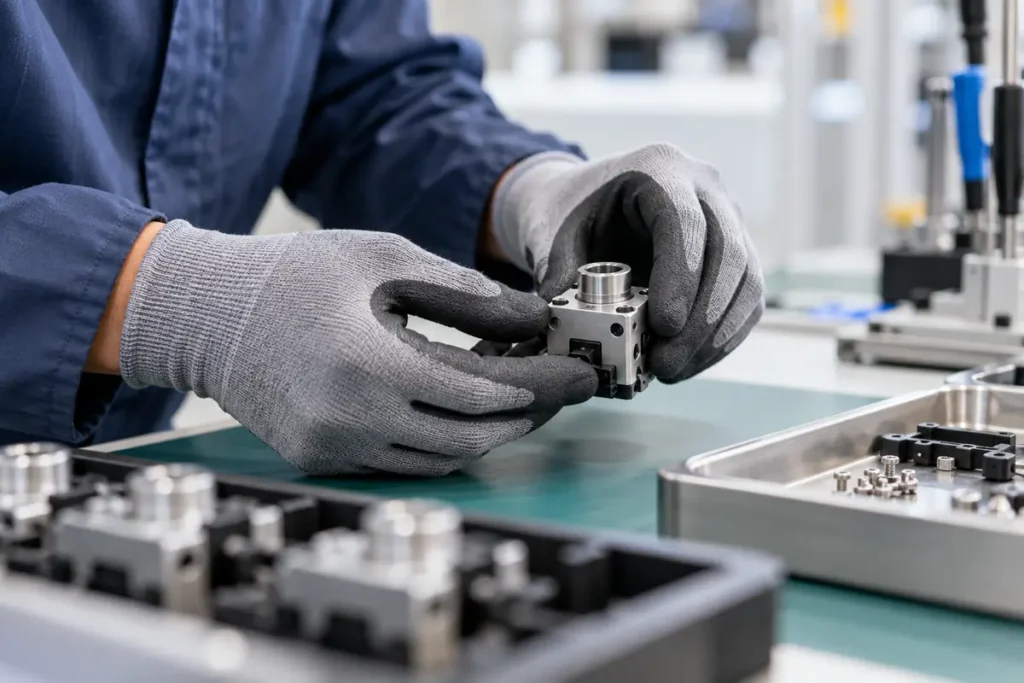
Choose foam nitrile gloves as your starting sample when precision, fingertip control, flexibility and long assembly cycles are your main concerns.
Test both when your task needs a balance of grip and dexterity. Product formulation matters, so a real workplace trial should decide the final selection.
What to Include in Your Wholesale Inquiry
When you request a quote, send:
- Intended job and industry
- Materials and tools being handled
- Dry, wet, dusty or lightly oily conditions
- Required cut, abrasion, puncture or impact ratings
- Preferred liner gauge and size range
- Palm, three-quarter or full coating requirement
- Sandy or foam nitrile preference
- Color and logo requirements
- Packaging format
- Estimated order quantity
- Sample-testing requirements
If you need private-label or bulk supply, review Everpro’s work gloves wholesale service or submit your specification through the contact page.
Frequently Asked Questions
Are sandy nitrile gloves better than foam nitrile gloves?
They are better for different priorities. Sandy nitrile is commonly chosen for a pronounced grip texture and demanding handling. Foam nitrile is commonly chosen for flexibility, comfort and precision work. You should test the exact models in your task.
Which nitrile coating is better for oily parts?
Either coating may work for light oil contact, depending on its formulation and texture. Test samples with the actual oil level and component surface. For chemical exposure, request separate chemical-resistance data.
Which type is more breathable?
Breathability depends strongly on coating coverage and liner. Lightweight palm-coated foam nitrile gloves often prioritize ventilation, but you should compare complete glove constructions.
Are foam nitrile gloves waterproof?
Not necessarily. A palm-coated glove leaves areas of the knitted liner exposed. Even a fully coated glove should not be described as waterproof unless its finished construction has been tested for the relevant requirement.
Can sandy nitrile gloves provide cut protection?
The coating itself does not determine the ANSI or EN cut level. Cut resistance mainly depends on the complete tested construction, especially the liner. Check the report for the exact glove.
What is the difference between foam nitrile and microfoam nitrile?
Microfoam generally describes a finer foam coating structure used on thin, flexible gloves. Terminology varies by supplier, so compare thickness, texture, grip and test results rather than relying only on the product name.
Can you customize both coating types?
Many manufacturers offer customized coating colors, liner colors, logos, labels and packaging. Available options depend on coating formulation, order quantity and production process.
Final Buying Advice
Your decision between sandy nitrile and foam nitrile should begin with the work, not the coating label. Identify your hazards, grip conditions, dexterity needs and expected wear. Then compare equivalent samples and document worker feedback.
When you evaluate the full glove—liner, coating, coverage, fit and verified performance—you can choose a nitrile-coated work glove that supports safer handling and consistent daily use.