



I. Export Analysis of China’s Work Safety Gloves
China stands as the world’s largest producer and exporter of work safety gloves, with an annual output accounting for over 70% of the global total. Its products are sold to more than 200 countries and regions worldwide. In 2025, the industry’s overall export scale reached USD 1.77 billion, experiencing a slight decline of 5.37% from the previous year. However, the market is expected to return to an upward growth trajectory in 2026.
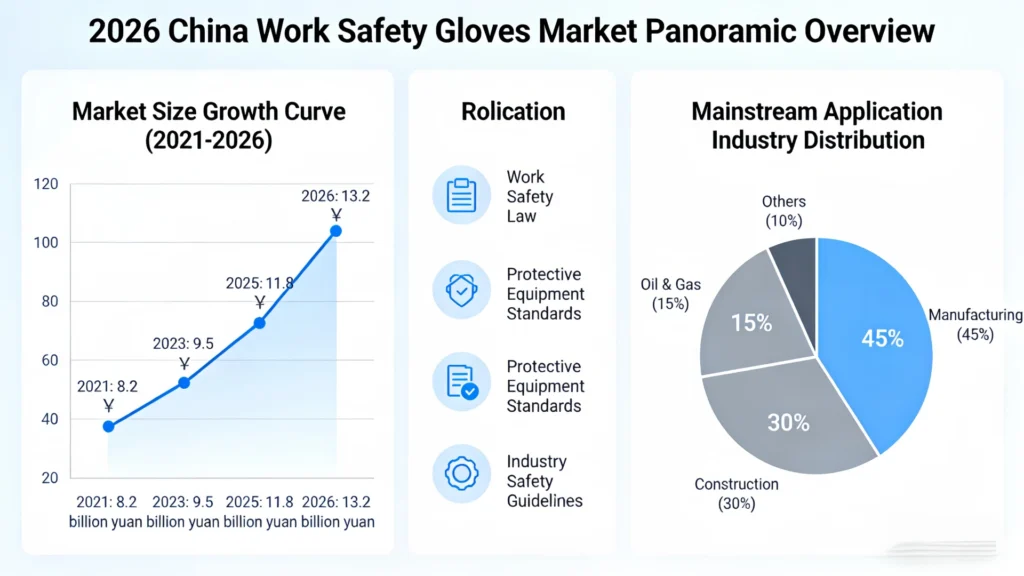
In terms of overseas demand structure, the primary purchasers are developed countries in Europe and America. On one hand, supermarkets like Walmart and leading brand manufacturers such as Honeywell engage in bulk procurement of conventional categories. On the other hand, terminal factories in the electronics and automotive sectors in Europe and America directly procure specialized protective gloves, with a preference for high-end, customized, and professional products.
Domestic export capacity and supply sources for work safety gloves are highly concentrated in the East China region, accounting for 90.04% of the total. Jiangsu, Shandong, and Zhejiang are the core export provinces, with Shanghai included, collectively representing over 80% of exports and forming a solid industrial export cluster advantage that ensures efficient operation of the export supply chain.
II. Emerging Growth Point: Explosive Growth in the Vietnamese Market, with China Maintaining Dominance
As Chinese work safety glove companies establish factories in Vietnam, China has become the largest supplier to the Vietnamese market, accounting for nearly 80% of its total imports. This highlights the comprehensive advantages of Chinese products in terms of cost-effectiveness, production scale, and delivery timeliness, fostering a deeply intertwined supply-demand relationship with Vietnam.
Vietnamese domestic production capacity for work safety gloves stands at only about 13%, focusing primarily on low-end domestic demand and regional redistribution. The potential for substitution and competitive threat from domestic sources is minimal. Other countries’ import shares are extremely low, making it unlikely that China’s dominant position will be challenged in the short term.
Data from the top ten purchasing companies in Vietnam over the past year indicates sustained growth in demand, with several companies experiencing double or even multiple-fold increases in procurement volumes, reflecting ample downstream terminal orders and an explosive release of demand for labor protection products. Additionally, multiple new purchasing companies have entered the market, including new factories, emerging traders, and cross-category transformation companies, indicating that the Vietnamese market is still in a high-speed expansion phase and has not yet entered a period of intense internal competition, providing a golden opportunity for domestic companies to acquire customers and expand export shares.
III. Corporate Procurement and Customer Development: Precise Layout Based on Customs Data
Customs data serves as a core tool for analyzing foreign trade markets and work glove procurement, offering objective and precise insights into market dynamics and customer purchasing behaviors. It provides fundamental data support for companies to formulate targeted procurement strategies.
Taking India, one of the top ten purchasing countries for work safety gloves, as an example, visual analysis of customs data enables a clear assessment of market trends and whether it represents a worthwhile incremental market for layout. By reviewing core indicators such as India’s annual import volume, year-on-year growth rate, and average import price of work safety gloves, annual change trends can be visually presented, accurately identifying market growth inflection points. If import volumes and values continue to rise, it indicates expanding market demand and an incremental market with high development value. Conversely, if there is a decline, further analysis is needed to determine whether it is a short-term market adjustment or long-term demand contraction.

At the customer development level, analysis of customs data aids in precisely targeting key development objects, enhancing development efficiency and success rates. By screening and analyzing purchasing company data, focus is placed on two core customer types:
First, purchasing companies with sustained increases in demand, often due to business expansion and order growth, whose existing suppliers’ production capacities and delivery timeliness cannot meet their procurement needs, making them highly potential core customers in need of new stable suppliers to fill gaps and reach procurement saturation.
Second, new purchasing companies (possibly newly established factories, traders, or companies transitioning from other categories into the labor protection glove sector), which have not yet formed stable supply chain systems and are still exploring and comparing existing cooperation models and supplier qualifications, are more inclined to choose long-term partners with stable supply chains, reliable product quality, and cost-effectiveness, with relatively lower barriers to cooperation.
Additionally, suitable suppliers can be identified by screening through customs data for those with large export volumes and making preliminary judgments based on export regions and global distribution regarding the quality grades of the work safety gloves they supply, thereby initially identifying or finding new partners.
For the aforementioned content, further analysis can be conducted by extracting transaction price information from customs data to support the formulation of targeted cooperation strategies. By extracting past transaction records of purchasing companies, including transaction prices and price fluctuation ranges, their price sensitivity and budget intervals can be accurately assessed, while comparing quotation levels of similar suppliers clarifies one’s own price advantages and adjustment spaces, facilitating subsequent procurement budgeting and supplier selection.
IV. Product Layout Directions for Work Safety Gloves in 2026
1. Specialized Work Safety Gloves for the New Energy & Electronics Industry
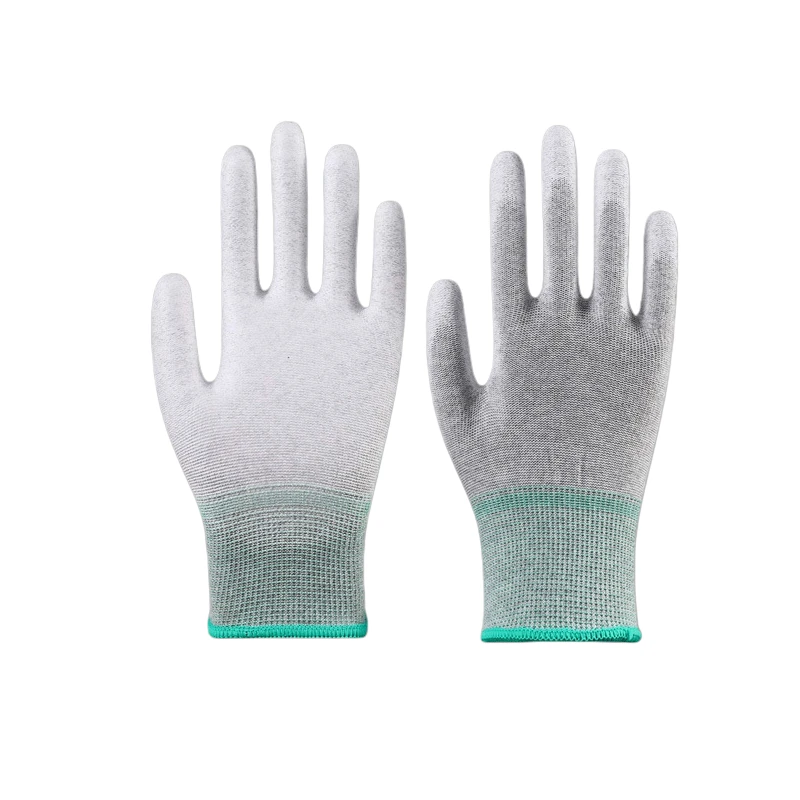
Focusing on rigid scenarios such as lithium batteries, photovoltaics, precision electronics assembly, and chip packaging, high-end functional categories are prioritized: core recommendations include anti-static nitrile coated gloves (precisely controlling surface resistance at 10⁶–10⁹Ω, suitable for cleanroom anti-static workshop standards); targeted deployment of electrolyte-resistant and corrosion-resistant special gloves to resist electrolyte leakage and corrosion in lithium battery production; and synchronized lightweight touchscreen dexterous gloves that balance precision operation sensitivity with electronic device touch compatibility, meeting the practical needs of automated production lines and precision workstations.
Glove Recommendation: Anti-static Work Gloves
2. Wear-Resistant Work Safety Gloves for Construction Engineering & Machinery Manufacturing
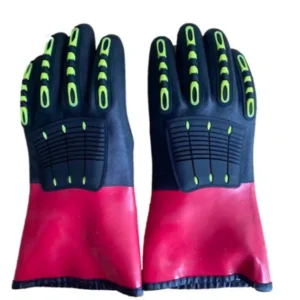
Delving into high-risk rigid sectors such as infrastructure construction, heavy machinery processing, sheet metal cutting, and steel structure operations, high-strength protective attributes are reinforced: mainly promoting gloves that comply with the full range of EU EN388 certifications (grades A-F) for high-grade cut resistance; uperimposing composite functional styles with anti-slip textures and impact-resistant buffer pads, suitable for heavy-duty grinding, handling, and assembly scenarios; and focusing on creating best-selling wear-resistant kings and cut-resistant king series to enhance puncture, wear, and tear resistance, suitable for high-frequency, high-intensity heavy work operations, replacing ordinary low-end labor protection models.
Glove Recommendation: Construction Work Gloves, Machinery Work Gloves, Anti-collision Gloves, Impact-Resistant Gloves, etc.

3. Specialized Warm Gloves for Cold Chain Warehousing & Low-Temperature Operations
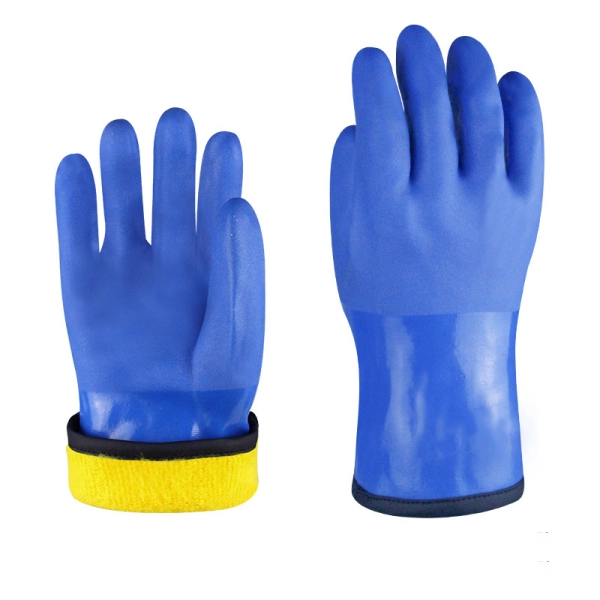
Targeting sectors such as cross-border cold chain logistics, fresh food freezing processing, cold storage operation and maintenance, and extreme low-temperature operations in polar regions: research and development of specialized categories suitable for -30°C extreme low-temperature environments, adopting chloroprene rubber and TPE high-quality composite materials to ensure flexibility without stiffening or cracking in ultra-low temperatures, while taking into account waterproofing, cold resistance, and flexible operation, addressing the pain points of ordinary gloves being prone to breakage and clumsy wear in low temperatures, suitable for cold chain full-process operation protection.
Glove Recommendation: Winter Protective Gloves
4. High-End Precision Manufacturing & Environmentally Compliant Work Safety Gloves
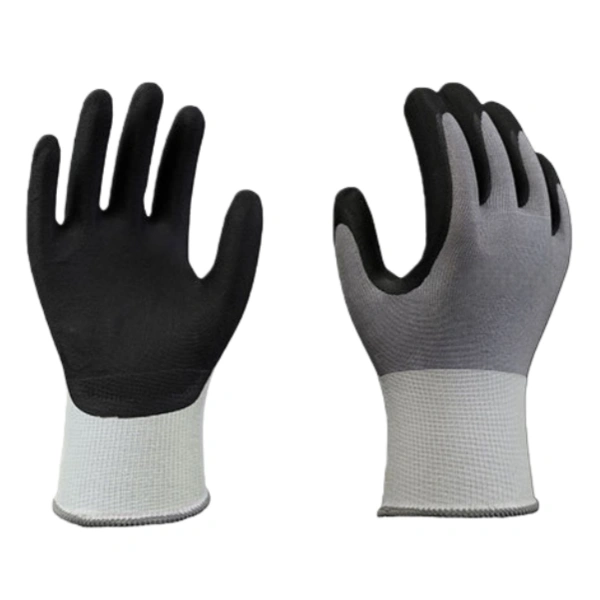
Targeting high-standard sectors such as high-end intelligent manufacturing, medical devices, precision instruments, and aerospace, lightweight, environmentally friendly, and refined products are deeply cultivated: main recommendations include ultra-thin PU-coated precision gloves that fit the hand closely and offer operation without sensation; upgraded micro-foaming process models that enhance breathability and comfort; deployment of LSOH low-smoke halogen-free special gloves suitable for stringent flame-retardant and low-smoke safety scenarios; and increased investment in bio-based environmentally friendly biodegradable gloves that align with environmental compliance requirements in overseas European and American markets, matching high-end brand centralized procurement and foreign trade high-premium order demands.
Glove Recommendation: PU Dipped Gloves
V. Work Safety Gloves Market Outlook for 2026
In 2026, the Chinese work safety gloves market will face both opportunities and challenges. On one hand, the market will leverage global production capacity advantages and support from the East China industrial cluster, capitalizing on the explosive growth of emerging markets like Vietnam to achieve a rebound in export scale. Simultaneously, as demand upgrades in sectors such as new energy, high-end manufacturing, and cold chains, labor protection gloves will transition toward higher-end, more functional, and more environmentally friendly directions. Companies that leverage customs data for precise customer and product layouts will have the opportunity to seize the initiative in global market competition.
On the other hand, the ongoing conflict between the US and Iran, with Iran blocking the Strait of Hormuz, has led to a significant surge in global oil prices. Since the core raw materials for work safety gloves (such as nitrile latex and PVC paste resin) are predominantly part of the petrochemical industry chain, rising oil prices directly drive significant adjustments in raw material prices, thereby significantly increasing corporate procurement costs.
Coupled with persistent uncertainties in the international situation and increased risk factors such as raw material price fluctuations and supply chain instability, companies with procurement needs are advised to place orders promptly to lock in costs and mitigate risks associated with subsequent price increases and supply fluctuations, achieving stable procurement and development.